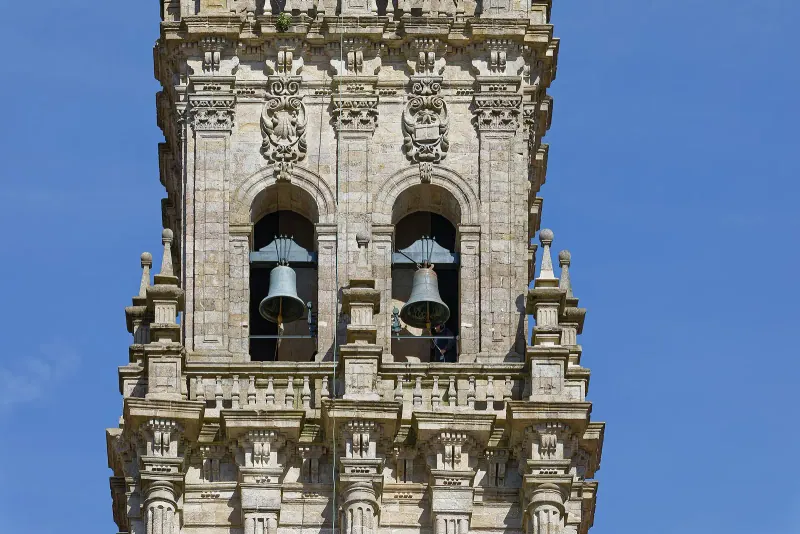
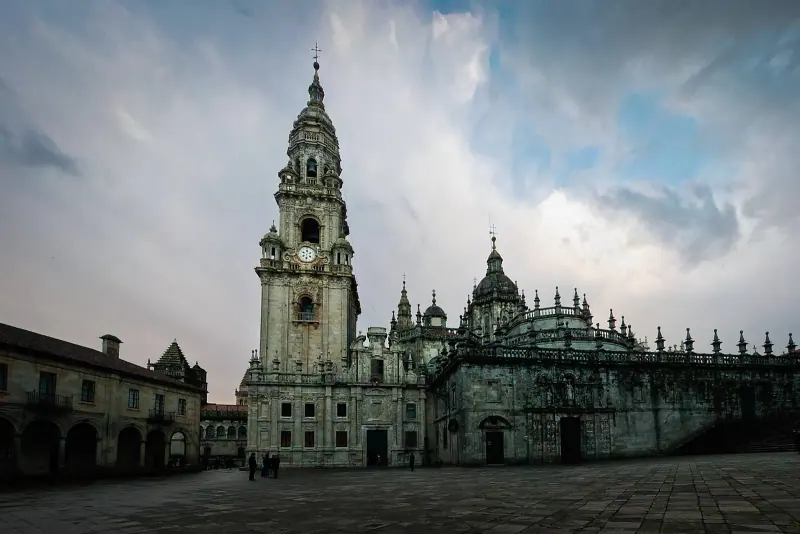
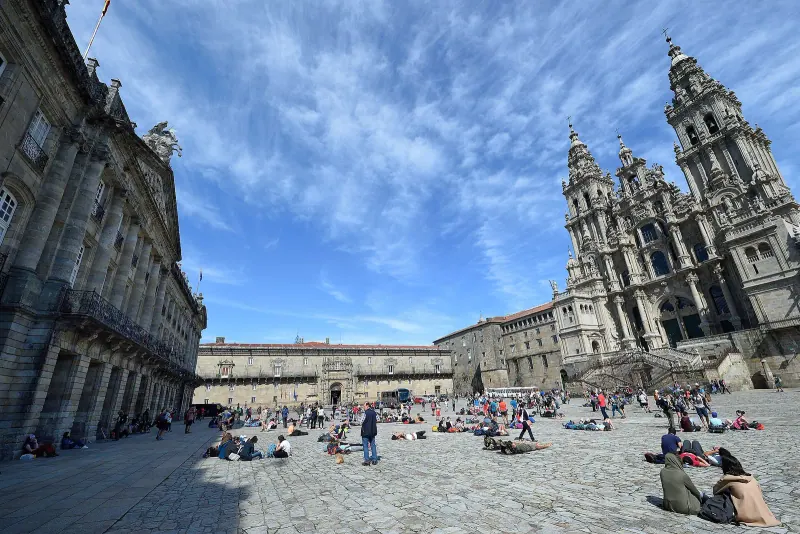
Santiago de Compostela is where the Camino ends and the city shows it: a granite old town, a working cathedral, a market that cooks what it sells and a coast an hour away. Two days covers the core.
Granite lanes, a working cathedral and Galician seafood, for travelers who accept rain and share the square with pilgrims.
Best time
May, June, September and early October
How long
Two days covers the cathedral and rooftop, the old town lanes, the market and a long seafood meal. Add a third day for Finisterre and the Costa da Morte or a short train trip along the Galician coast.
Cost level
Moderate
Nearest airport
Santiago de Compostela Airport (Rosalia de Castro) (SCQ)about 25 min to the centre
Santiago de Compostela is worth it for travelers who like old stone, food and watching people arrive somewhere they walked to. Reports describe a compact granite old town built around the cathedral, a square where pilgrims arrive after hundreds of kilometers, and a market and bar scene that makes eating the main event. Two days covers the core, and a third opens the coast.
The hard truth is crowds and weather. Travelers report entry lines of hundreds at midday, pilgrim Mass queues of about 40 minutes, an Obradoiro square that residents say pilgrims treat like a campsite, and about 140 wet days a year according to the city's tourism site. The last 100 km of the trail brings school groups and tour buses, and regional press reported record Camino volumes in August 2026. The cathedral is a place of worship first, so its schedule can shift, and Mass times moved to a nearby church from 16 October 2026 while works go on.
The fix is timing and a plan. Go in May, June or September, book the rooftop tour and the Portico of Glory ahead, eat at the market in the morning, when the hall trades, and pack a rain layer in every month. Keep the Atlantic coast for the third day. If you arrive by air, check that the airport is running normally, since it closed for about five weeks in spring 2026.
Go if
Anyone who wants to see the end of the Camino and watch pilgrims arrive in the cathedral square
Food lovers who plan around the market, pulpo, scallops and a free tapa with the drink
Travelers who like stone architecture, rooftop views and a pedestrian old town
Couples and solo travelers on a two or three day city break combined with the Galician coast
Winter travelers who accept rain in exchange for quiet streets and lights
Skip if
You need guaranteed sun, since travelers report rain in nearly every season
You dislike queues and crowds in July, August and Holy Years
You want nightlife or a beach in town; the coast is a drive away
You expect a silent church, since reports describe the Mass as busy and managed like a tourist stop
You are walking the last stage and want a quiet finish; late July and August are the busiest weeks
The long read
What Santiago de Compostela is like, from the reports
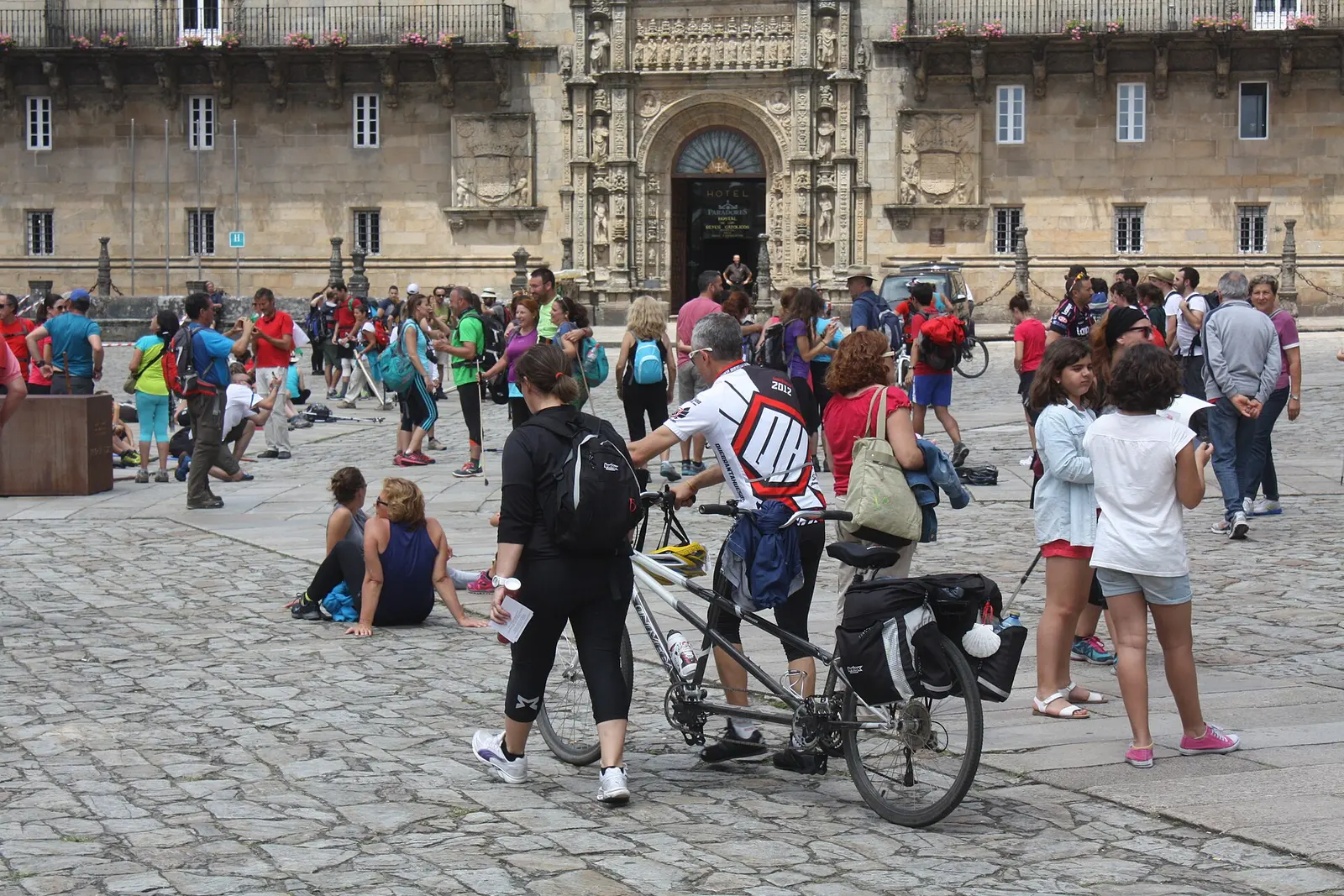
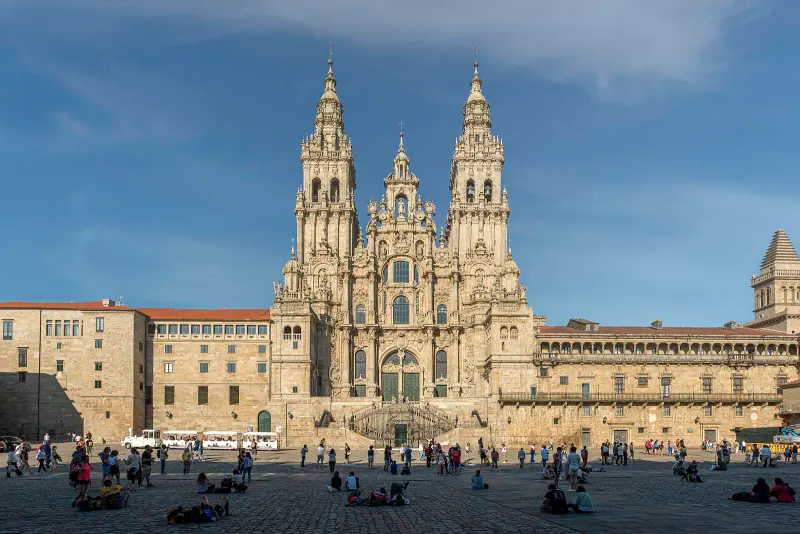
The reason most people come is the arrival. Pilgrims who walked from Sarria, Porto or farther describe their first sight of the cathedral towers from Monte do Gozo. One walker ended 280 km in the Praza do Obradoiro, went to Mass and hugged the apostle statue behind the altar. Another describes the emotional first view of the towers and the embrace of the apostle, followed by the queue for the arrival certificate.
Even visitors who did not walk feel the pull. A couple finishing a northern road trip called watching pilgrims complete the Camino the highlight of Santiago, and a traveler on an October trip found the pilgrims arriving the striking part of the stay. The square works as a stage for arrivals, with walkers embracing, photographing the facade and queuing for their certificates.
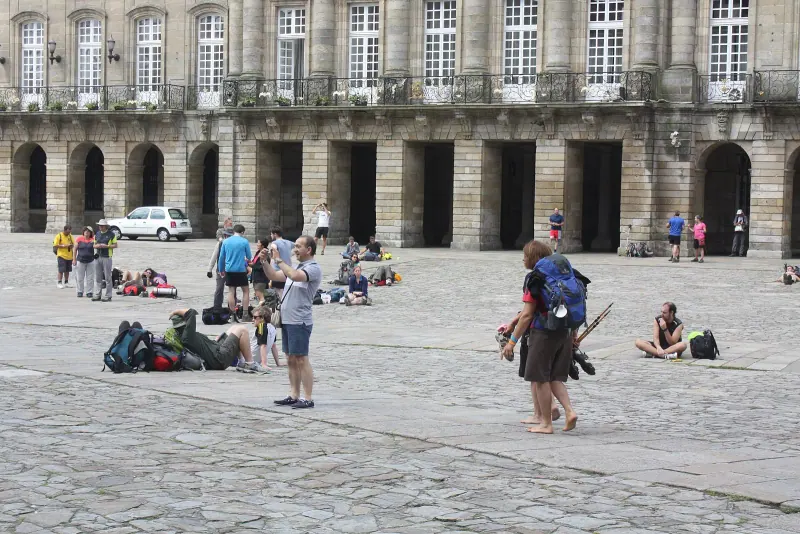
It is also crowded and sometimes tense. In July 2026 residents protested pilgrims who treated the square like a campsite, and in August neighbors told reporters they were tired of the crowds. A trade report describes noise that many visitors ignore. Treat the square with the same manners as a neighborhood plaza, because it is one.
Inside the cathedral and on the roof
Inside, travelers describe a working pilgrimage church rather than a quiet museum. A pilgrim queued about 40 minutes for the pilgrim Mass and found the cathedral impressive but managed like a tourist stop. A hiker found the midday entry line hundreds deep. Those who got in describe the swinging censer, the botafumeiro, as the moment that lands, and one filmed it crossing the transept as the emotional end of her Camino.
The censer does not swing at every Mass. A pilgrim information site lists the days it is usually used, such as Epiphany, Easter, Pentecost, 25 July, 15 August and Christmas, and says it can be requested on other days for a fee. In autumn 2026 the 9:30, 12:00 and 19:30 pilgrim Masses move to San Agustin church while works continue, so check the current arrangement before you plan around the ritual.
The rooftop tour is the part travelers rank highest. Walkers finishing the Camino found the roof walk better and longer than expected and called it the highlight of the city. Reports mention narrow spiral stairs, an all-stone roof, the Carraca tower and wide views over the old town. One traveler found the Portico of Glory slots sold out weeks ahead, and a cyclist nearly got shut out between the roof tour and the Mass, so leave a gap and book early.
The granite lanes of the old town
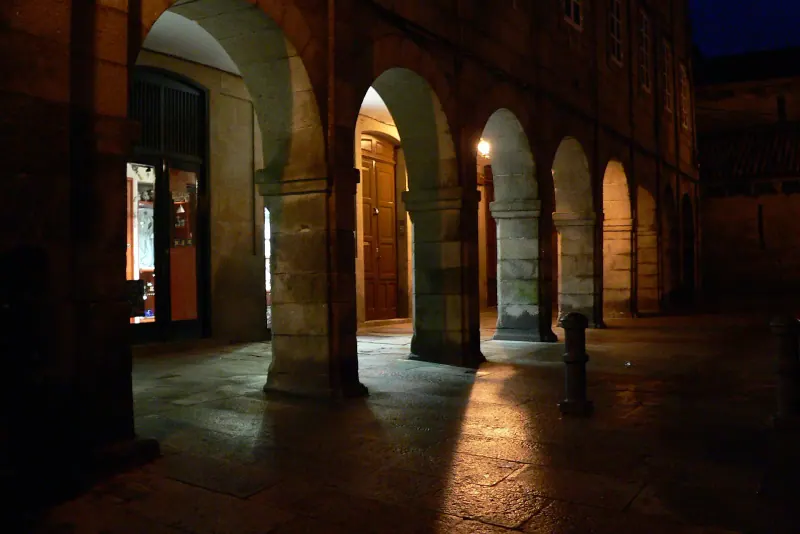
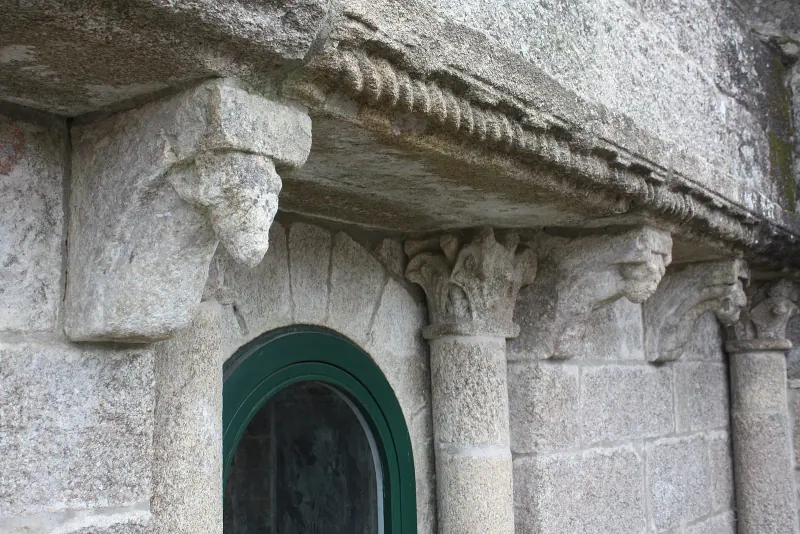
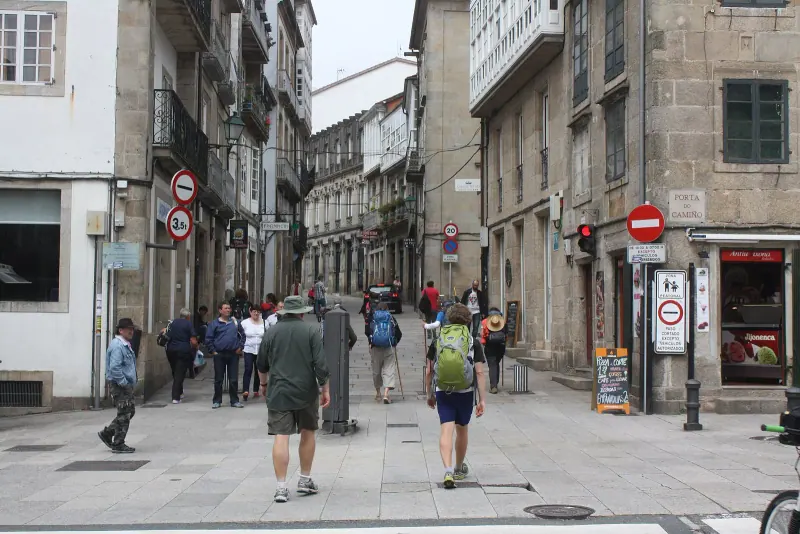
The old town has held world heritage status for 40 years, and it rewards slow walking. A returning pilgrim spent a day among the granite arcades, the Quintana and Fonseca squares and the market streets. The lanes are mostly closed to cars and the scale is small enough that nothing in the core needs a taxi.
Spring brings Holy Week, when a visitor watched processions thread the narrow streets and squares. Rain brings its own mood. A retiree learned that Galicia needs waterproof shoes, and national press in August 2026 described pilgrims filling the old town in drizzle and thanking the cooler summer.
Not everyone loves the center. One writer found it beautiful but heavy with souvenir shops, with tarta de Santiago on every counter. A trade report describes residents and shops leaving the historic core under visitor pressure. The calmer streets sit a few blocks from the Obradoiro, and early mornings are the quietest.
The market and Galician food
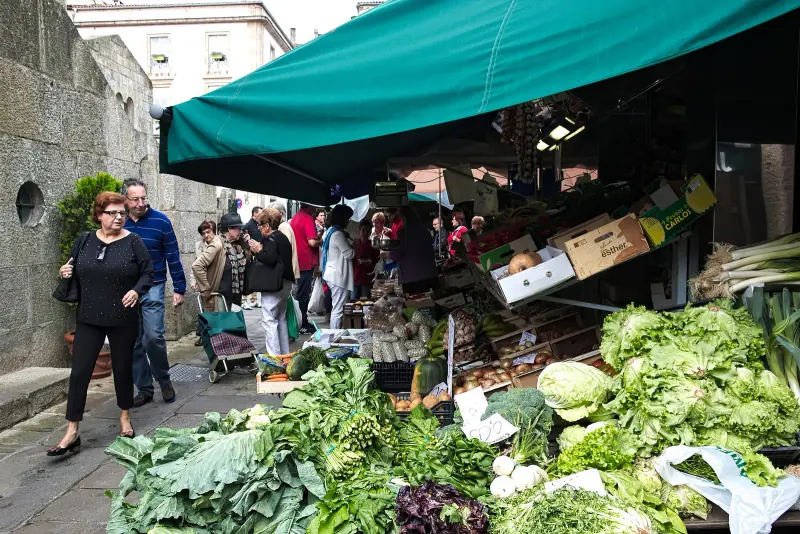
Food is the second reason to come, and the Mercado de Abastos is the center of it. A Spanish food writer had lunch inside the market, where the kitchen has no fridge and cooks what the stalls sell that morning. A returning pilgrim went straight there for barnacles, razor clams and scallops and called it a culinary highlight of Spain.
The practical rule is to go in the morning. The hall trades in the morning and the fish stalls wind down around lunchtime, so a late arrival finds less to buy. Regional press also reports the hall trying to win back younger local shoppers as the crowd tilts toward tourists, so buy from stalls and eat at the bars that cook your purchase, rather than treating it as a food court.
Beyond the market, travelers describe pulpo a feira, tarta de Santiago and tapas bars, and a local restaurant map says a free tapa comes with each drink in much of the old town. That makes self-guided grazing the strongest argument against paid food tours.
The last 100 km and who arrives
The city feels different depending on how people arrive. Walkers on the final stretch from Sarria describe sudden crowds, tour buses and school groups. One counted more people in an hour after Sarria than in a whole earlier day, and a slow-walking couple warns the last 100 km shocks, suggesting a late start to dodge the crowds.
The final approach is busy and emotional at once. Walkers describe teenagers on school trips, the long pull into Monte do Gozo, and a finish that one group found more subdued than a walk two years earlier. If you are walking in, plan a rest day before sightseeing.
August 2026 brought a record, with about 11,000 pilgrims arriving in three days according to regional press. That energy is part of the charm and part of the strain. Late spring and September offer the same sense of arrival with shorter lines.
Finisterre and the coast
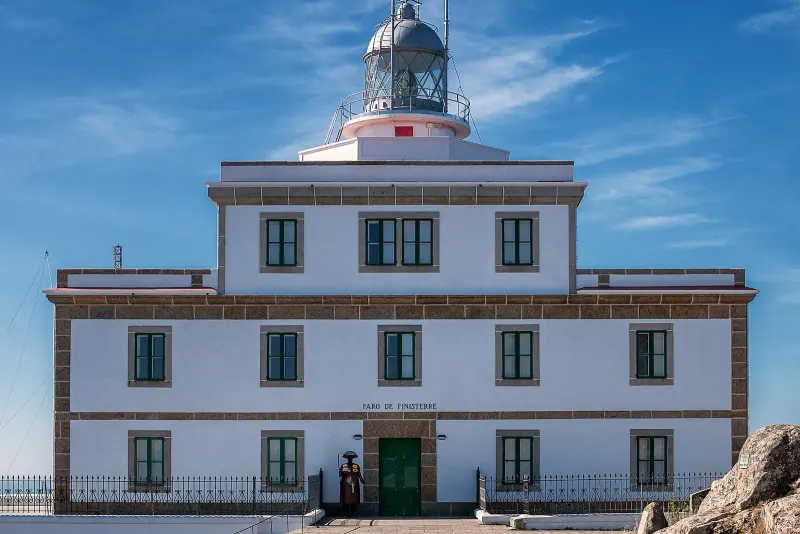
The standard day trip is the Costa da Morte to Finisterre, often with Muxia. Travelers who took a day tour were glad they saw the cape, and a month-long resident caught good coastal sun on the Costa da Morte.
Tours are the weak point. One day-tripper rode a full 48-seat coach, shared stops with about 200 other tourists and heard a guide speak fast in two languages. A hiking couple spent nine hours on a crowded coach and still did not regret it. A van traveler found the cape rough but overrun at sunset, with no magic left. Go in the morning, accept the coach, or rent a car and stay for the light.
Shorter trips work from the same Intermodal station. Padron and A Coruna are a short train ride, and the Rias Baixas wineries sit around Cambados. Check the operator timetables before you plan, because travel blogs list different times.
Where to base yourself
Travelers split the city into the old town, the Ensanche and the station area. The old town puts the cathedral and market within a few minutes, with the trade-off of noise. One Galicia trip found a hostal in the old town too noisy and bright at night, and neither traveler slept well, so ask for an interior room.
The Ensanche and the station area are quieter and cheaper, and a post-Camino planning guide weighs them for tired legs and early trains. The monastery hospedería near the cathedral is popular with pilgrims, who book its pilgrim room by email ahead, and one couple stayed in a monastery hospedería and a small pension in the old town after the Camino.
For a splurge, a couple describes a Parador room on the Obradoiro square with the cathedral at the doorstep. For a different pace, a spa hotel on the riverbank outside the center suits travelers with a car. Our twelve picks below spread across all four areas.
The pitfalls
What goes wrong in Santiago de Compostela
Rain in every month
Travelers describe wet streets and soaked shoes even in summer, and the city's tourism site puts it at about 140 wet days a year. A retiree learned the hard way that waterproof shoes matter, while August news described pilgrims in drizzle. Pack a rain layer in every season and plan indoor stops such as the market and cathedral museum.
Pilgrim Mass queues and moved Masses
A pilgrim queued about 40 minutes for the pilgrim Mass, and a hiker found the midday entry line hundreds deep. From 16 October 2026 the 9:30, 12:00 and 19:30 pilgrim Masses move to San Agustin church while works continue, so confirm the current place and time before you plan around them.
The botafumeiro is not guaranteed
Reports from 2025 and spring 2026 describe the censer swinging at the pilgrim Mass, but a pilgrim information site says it is usually used only on set days such as Epiphany, Easter and 25 July, or on request for a fee. Works inside the cathedral add further uncertainty, and the pilgrim information site notes the censer cannot be seen in action during renovation work, so treat the swing as a possible bonus, not a promise.
Rooftop and Portico slots sell out
A winter traveler found Portico of Glory slots sold out weeks ahead, and a cyclist nearly got locked out between the roof tour and the Mass. Book the rooftop and Portico tickets before you arrive and leave a gap between timed entries.
August crowds and local tension
National press in July and August 2026 reported residents protesting pilgrims who treated the Obradoiro square like a campsite and neighbors tired of the crowds, with a record of about 11,000 arrivals in three days. Expect a busy, sometimes tense old town in high summer, and keep noise low late at night.
Airport disruption
The airport closed for about five weeks of runway works in spring 2026, and travelers rerouted by high-speed train or by landing in Bilbao and driving. The airport bus was reorganized during the closure. Check the airport status and your airline before you book, and keep a train or car fallback.
Market timing
Reports and market guides describe a hall that trades in the morning, with the fish stalls winding down around lunchtime, so a late arrival finds less to buy. Regional news also reports the hall tilting toward tourists. Go in the morning, buy from the stalls and eat at the bars that cook what you buy.
Trail crowds on the last 100 km
Walkers report sudden crowds, tour buses and school groups after Sarria, with more people in an hour than in a whole earlier day. If you are walking in, start late in the day, book beds ahead and expect a busy final approach into the city.
When to go
Santiago de Compostela by season
Best time
May, June, September and early October
Local guides and travelers point to these months as the balance of lighter crowds and mild weather, with pilgrims still arriving daily. Showers still fall, so keep a rain layer.
Pilgrim arrivals in the Obradoiro square
Rooftop and Portico of Glory tours
Peak season
July and August
Pilgrim volumes peak and residents report strain on the old town. August 2026 brought about 11,000 arrivals in three days. Book rooms and rooftop tickets early.
Apostle festival in the last ten days of July each year (22 to 31 July in 2026), with the main day on 25 July and fireworks on the eve
Holy Year 2027: Holy Door opens 31 December 2026, with 25 July 2027 falling on a Sunday
Shoulder season
March, April and October
Fewer pilgrims than summer, with unsettled weather. Holy Week and Easter fill the old town, so book ahead for those dates.
Holy Week processions through the old town
Easter week pilgrim arrivals
Off season
November to February
Wet, cool and short on daylight, but the old town is quiet and the lights glow on stone.
Christmas lights from the Obradoiro square, switched on 28 November in 2025 and running to 6 January
Christmas market on the Carreira do Conde, running to 5 January
Three Kings parade through the streets on 5 January in past editions
Holy Door opening on 31 December 2026, the start of the 2027 Holy Year
Botafumeiro swings on dates such as Epiphany, 8 December and Christmas, according to a pilgrim information site
May, June and September to early October balance lighter crowds with pilgrim energy, though rain can fall in any month. July and August are the most crowded, and the Apostle festival peaks on 25 July. Winter is wet and short on daylight but quiet, with Christmas lights from late November.
Getting there and around
Airports near Santiago de Compostela
Airport
Distance
To the centre
How
SCQ Santiago de Compostela Airport (Rosalia de Castro)
10 km
about 25 min
City bus line 6A runs between the airport and the Intermodal station in about 20 to 25 minutes direct, longer on the stopping variant, with a single fare of EUR 1. A taxi from the center has a fixed fare of EUR 23 and takes about 15 minutes. The airport closed for runway works in April and May 2026, so check status before travel. (source, checked Oct 2026)
The old town is compact and mostly pedestrian, so you can walk almost everywhere. From the airport, city bus line 6A runs to the Intermodal station and the single fare is EUR 1 and a taxi has a fixed fare of EUR 23, according to the national tourist board. Short regional trains reach Padron and A Coruna from the same station, while Finisterre needs a tour or a rental car.
Where to stay
12 hotels that fit this trip in Santiago de Compostela
We earn a commission if you book through our links. It never changes a verdict. How this works
Luxury
High-end stays whose guests report the setting and service earn the rate.
Parador de Santiago (Hostal dos Reis Catolicos)
A 15th-century royal pilgrim hospital beside the cathedral, with vaulted halls, courtyards and two restaurants. Guests praise the location and breakfast; rooms vary a great deal in size and view, so ask when booking.
A converted convent with a garden, an indoor pool and a restaurant a few minutes from the cathedral. Listed as five-star on booking sites, with stone cloisters and a garden that guests rate highly.
A riverside spa hotel with an indoor pool and gourmet restaurant, the countryside pick. Listed as four-star, so a top boutique stands in for the five-star tier; guests praise staff, though one found it a long walk to the main square with no shuttle.
A large hotel listed as five-star, with indoor and outdoor pools and a spa in a quiet park district east of the old town. Guests praise breakfast, staff and big rooms.
The comfortable middle: well placed, well run, priced for a normal trip.
San Francisco Hotel Monumento
A converted monastery with an indoor pool a short walk from the cathedral; the most comfortable base inside the historic core for travelers who want character and rest.
A garden-facing hotel on the old town's eastern edge, within a ten-minute walk of the market and the cathedral; quiet while staying central, which suits travelers who dislike lane noise.
A full-service hotel in the Ensanche, between the old town and the newer center, with a seasonal outdoor pool, sauna and gym. Guests describe it as a good four-star rather than a five-star.
A small three-star boutique in a historic building by the market, with white-on-white rooms, tall sash windows and a popular restaurant. Guests like the location and design.
Cheaper beds that travelers still rate well for location and cleanliness.
Hospederia San Martin Pinario
A monastery lodging with a garden, a library and a 24-hour desk, popular with pilgrims, who book its pilgrim room by email. A two-star lodging where the setting is the point.
A two-star hostel with private rooms, laundry and free Wi-Fi, a short walk from the cathedral. The desk is staffed around the clock in several languages; it suits budget travelers and pilgrims.
A small two-star hotel in the old town about 150 meters from the cathedral, with a high guest rating for its value and position; the station is about 1.2 km away.
A large three-star hotel a few minutes from the station and the airport bus stop, about a 10-minute walk to the cathedral. Guests praise the location, price and professional staff.
How many days do you need in Santiago de Compostela?
Two days covers the cathedral and rooftop tour, the old town, the market and a long seafood meal. Add a third day for Finisterre and the Costa da Morte or a short train ride to the Galician coast. Pilgrims finishing the Camino should add a rest day.
Is Santiago de Compostela worth visiting if you are not a pilgrim?
Yes, for stone architecture, food and the atmosphere of arrivals. Travelers who did not walk the Camino still call the cathedral and the pilgrims in the square the highlight. Expect rain and queues, and visit outside July and August if you can.
Does it rain a lot?
Often. The city's tourism site gives about 140 wet days a year, with November to January the wettest and July the driest, and travelers report showers even in summer. Pack a rain layer and waterproof shoes in any month.
Do I need to book the cathedral tickets ahead?
For the rooftop tour and the Portico of Glory, yes. A winter traveler found the Portico slots sold out weeks ahead, and a cyclist nearly got shut out between the tour and the Mass. Mass entry itself is by queue, so arrive early.
Do I need a car?
Not for the city, where the old town is walkable and the airport and Intermodal station connect by bus and train. A car or a tour helps for Finisterre and the Rias Baixas, though day tours can feel crowded.
When is the next Holy Year?
The next Holy Year is 2027, because 25 July falls on a Sunday. The Holy Door opens on 31 December 2026 and closes on 31 December 2027, so expect larger crowds and earlier bookings through 2027.
How this guide was written. We read 48 traveler reports about Santiago de Compostela published between Nov 2024 and Sep 2026, 5 of them mainly negative, and checked the facts against official sources in Oct 2026. Nobody on the team claims a visit; hotel picks are chosen from what guests report, never from what they pay us. How we judge.