Santiago de Compostela / The verdict
Where to stay in Santiago: which area?
Stay in the Casco Antiguo, the walled old town around the cathedral: every guide puts first-timers there for the walkable sights, the tapas streets and the pilgrim-energy evenings. Pick El Ensanche for quieter nights, easier parking and better-value rooms ten minutes out, or San Pedro for a calmer neighborhood on the Camino's last approach.
By The Real Traveler Experiences team. We earn a commission if you book through our links. It never changes a verdict.
The Santiago de Compostela story
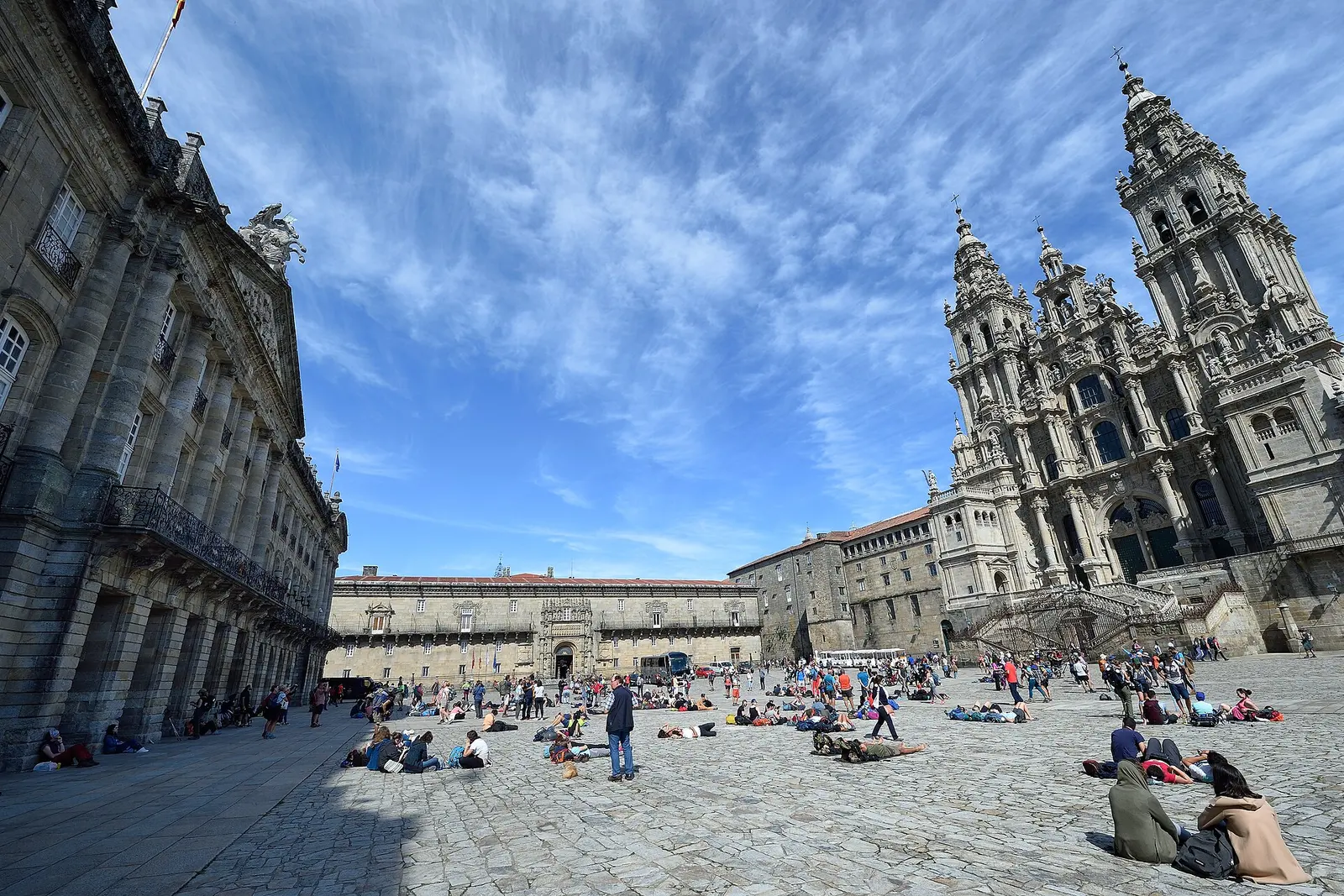
Santiago de Compostela is worth it for travelers who like old stone, food and watching people arrive somewhere they walked to. Reports describe a compact granite old town built around the cathedral, a square where pilgrims arrive after hundreds of kilometers, and a market and bar scene that makes eating the main event. Two days covers the core, and a third opens the coast.
The verdict in 30 seconds
Our pick: Casco Antiguo, the old town (runner-up: El Ensanche, the new town)
Stay in the Casco Antiguo, the walled old town around the cathedral: every guide puts first-timers there for the walkable sights, the tapas streets and the pilgrim-energy evenings. Pick El Ensanche for quieter nights, easier parking and better-value rooms ten minutes out, or San Pedro for a calmer neighborhood on the Camino's last approach.
Go if
- First-timers who want the cathedral, market and tapas streets on foot; the Casco Antiguo puts all of it within ten minutes
- Pilgrims finishing the Camino; the certificate office sits in the old town and San Pedro holds the last-stage albergues
- Drivers and long-stayers who value parking and laundry; El Ensanche handles both the old town cannot
- Budget travelers; San Pedro's pensions and albergues run the cheapest beds in town
Skip if
- You need silence at night; the old town's tapas streets run late and reports warn about weekend noise
- You plan to drive daily; the historic center is pedestrianized and parking means paid lots at the edge
- You want a pool or a gym; the center is pensions and boutique mansions rather than resort stock
- You only need a bed before a dawn flight; even then the city is just 12 km away, so the airport strip rarely pays off
The options
Casco Antiguo, the old town Go
First-timers and sightseers who want the cathedral, market and tapas streets on foot.
Good
- Everything is walkable: cathedral, Praza do Obradoiro, Mercado de Abastos and the tapas axis sit inside the walled core.
- The atmosphere is the point; reports describe evening crowds of pilgrims finishing the Camino on the square.
- The Parador and a run of medieval mansions give it character stock the newer districts lack.
Watch out
- Night noise on the tapas axis; weekend reports warn about late crowds until the early hours.
- No cars: pedestrianized streets, luggage drag from the taxi drop and paid parking lots only.
- The priciest streets in town in season; the same tier costs more inside the walls.
Correos left-luggage at Rua do Franco 4Santiago Turismo, official accommodation guide
El Ensanche, the new town Go
Drivers, longer stays and travelers who want quiet nights a short walk from the sights.
Good
- Real-world value: the same room tier runs cheaper than inside the walls and parking actually exists.
- Ten to fifteen minutes' flat walk to the cathedral; close enough to use the old town without paying for it.
- Quieter, residential evenings with local cafes on its own avenues.
Watch out
- A city district rather than the postcard; the medieval feel starts at the old-town edge.
- The walk home goes uphill from the center for some addresses.
- Fewer character stays: it is mostly mid-range hotels and apartment blocks.
Hotels in El Ensanchepartner site
San Pedro and Belvis Go
Pilgrims, budget travelers and anyone wanting a village-quiet neighborhood on the Camino's last approach.
Good
- The pilgrim quarter: Seminario Menor albergue, finishing walkers and the classic bar strip along Rua de San Pedro.
- The quietest of the three; reports describe a small-village feel with Belvis park below.
- The cheapest beds in town, from albergue bunks to design pensions.
Watch out
- Ten to fifteen minutes from the cathedral, downhill in, uphill back at night.
- Albergue stock means shared rooms and early departures; not everyone wants dorm life.
- Fewer evening options than the center after the pilgrim bars close early.
Near Lavacolla airport Skip
Almost nobody: one dawn departure justifies it, nothing else does.
Good
- A five-minute airport shuttle and free parking; useful the night before a very early flight.
Watch out
- Twelve kilometers out on a road strip with nothing around; reports call it a transit stop rather than a base.
- Every day in town costs a bus ride or taxi each way.
- You miss the evening city entirely, which is most of what Santiago is for.
| Criterion | Casco Antiguo, the old town | El Ensanche, the new town | San Pedro and Belvis | Near Lavacolla airport |
|---|---|---|---|---|
| Walk to the cathedral | 2 to 10 minutes | 10 to 15 minutes | 10 to 15 minutes | 12 km away; 6A bus or taxi |
| Night-time noise | Tapas-street buzz until late on weekends | Residential and quiet | The quietest of the three | Silent, with nothing around |
| Typical stay | Pensions, historic mansions, the Parador | Mid-range hotels and apartments | Albergues and budget pensions | Roadside hotel stock |
| Car and parking | Pedestrianized; paid lots at the edge | Street and garage parking | Possible and easier than the center | Free parking at the door |
| Food and bars | Everything on foot: Franco, the market, the squares | Local cafes on its own avenues | Pilgrim bars on Rua de San Pedro | The hotel restaurant or a drive |
| Price feel | The highest in town in season | Noticeably cheaper for the same tier | The cheapest beds in town | Cheap, but transit eats it |
What it costs
- Correos left-luggage service at the Rua do Franco 4 post office: €4 (EUR 4 per bag per day including VAT, run by the postal service two minutes from the cathedral; the fix for the town's late check-ins and early Camino finishes). Official source, checked Oct 2026.
- Santiago tourist tax, hotel of two-star superior to four-star, per person per night: €2 (In force since 1 October 2025; 2.50 EUR at four-star superior and five-star, 1.50 EUR at pensions and one-star hotels; charged for up to five nights; minors exempt). Official source, checked Oct 2026.
- Santiago tourist tax, albergue or tourist apartment, per person per night: €1 (Stays in the Xunta's public pilgrim albergues are exempt; charged for up to five nights). Official source, checked Oct 2026.
What travelers report
Based on 12 traveler reports (Jan 2025 to Sep 2026) and the official sources linked on this page. 0 were negative.
What people like
- Old-town pensions convert travelers: the walkable cathedral, market and tapas nights get the warmest reports (5 of 12)
- The Parador and the historic mansions; reports call sleeping in a medieval building part of the trip (3 reports)
- San Pedro's quietness and its pilgrim village feel ten minutes from the center (3 reports)
- El Ensanche's value: the same money goes further and parking actually exists (2 reports)
What people complain about
- Old-town noise on weekend nights, especially along Rua do Franco and the party squares (4 of 12 reports)
- Access and parking pain: pedestrianized streets, luggage drag and paid lots at the edge (3 reports)
- Season pricing and sellouts; the holy-year build-up squeezes the best-value pensions first (3 reports)
- Thin walls and dated bathrooms in some historic pension stock (2 reports)
How to do it right
- Book early: 2026 is the build-up year to the 2027 Xacobeo holy year and guides warn the best-value pensions sell out months ahead in season.
- Choose by street as well as area: the old town's party axis is Rua do Franco and Plaza de Cervantes, so a pension two lanes over sleeps noticeably better.
- Check in late is normal, around 15:00; drop bags at the Correos left-luggage office on Rua do Franco 4 (EUR 4 a day) or ask the pension to hold them.
- Pilgrims split between the huge Seminario Menor albergue in San Pedro and private pensions nearer the cathedral; the walk between them is about ten minutes.
- El Ensanche trades cathedral views for real savings: the same room tier runs cheaper and you can actually park near it.
- Skip the airport strip for city stays: Lavacolla sits 12 km out with nothing around; the 6A bus links it to the center but adds dead transit time to every day.
The trap to avoid
Booking the airport hotel for a city stay. The Lavacolla strip sits 12 km out with a petrol station and road hotel stock and nothing else; reports call it a dawn-flight play only. The same logic applies to the intermodal strip south of the tracks unless you are catching a very early bus.
What to do instead
Why this pick
Stay in the Casco Antiguo, the walled old town around the cathedral, on a first visit. The guides and stay reports in the log agree more completely than on most where-to-stay questions: the cathedral, the market, the tapas streets and the evening pilgrim arrivals are all on foot from there, and reports describe the nights inside the walls as much of what the city is. Pilgrims add a second reason, since the old town is where the Camino ends.
The trade-offs are real but mild. One couple’s hostal in the old town disappointed them with street noise and light, and neither slept well; the tapas axis around Rua do Franco runs late on weekends. Choosing a pension a couple of lanes off that axis is the usual fix. Prices are the town’s highest, and the center is pedestrianized, so drivers pay for lots at the edge.
El Ensanche is the runner-up for drivers, longer stays and quieter nights: one road-tripper based two days in a modern apartment outside the old town and walked about 25 minutes to the cathedral. San Pedro and Belvis is the pilgrim and budget quarter, with the Seminario Menor albergue and the last approach of the Camino. A post-Camino decision guide weighs the old-town edge, El Ensanche and the Intermodal station area for tired legs and early trains. The airport strip at Lavacolla only makes sense before a dawn flight.
What it costs
Rooms are rising. Local news reports a record August with Santiago hotel rooms averaging 113 euros a night, and guides warn that in the build-up to the 2027 holy year the best-value pensions sell out months ahead in season. For a splurge, a couple’s Parador review describes a room on Obradoiro square as what the money buys. For the opposite end, one serial pilgrim books a 30 euro pilgrim room at the Hospederia San Martin Pinario by email ahead, and another walker slept in a converted monk’s cell there.
Since October 2025, Santiago adds a tourist tax on top of the room rate. The city’s official question-and-answer sheet lists 2 euros per person per night for two-star superior up to four-star hotels, 1.50 euros for pensions and one-star hotels, 2.50 euros for four-star superior and five-star hotels, and 1 euro for albergues and tourist apartments, charged for up to five nights. Minors are exempt, and so are stays in the Xunta’s public pilgrim albergues.
Practicalities
Check-in is often around 15:00, which clashes with late-morning Camino finishes and early arrivals. The Correos left-luggage office at Rua do Franco 4 lists 4 euros per bag per day and sits two minutes from the cathedral, which solves the gap. If you arrive by car, check where your hotel sends you to park before booking anything inside the walls.
Book or check times
Correos left-luggage at Rua do Franco 4Santiago Turismo, official accommodation guideSeminario Menor pilgrims' albergue
We earn a commission if you book through our links. It never changes a verdict. How this works
Hotels in El Ensanchepartner site
Getting there
Flying into Santiago de Compostela?
Compare every way from the airport first; trains and buses are often cheaper. Book a private airport transfer partner site
Questions
Which area is best for a first visit?
The Casco Antiguo, the old town around the cathedral. Every guide puts first-timers there: the cathedral, market, tapas streets and pilgrim office are all within a ten-minute walk, and the streets after dark are most of what Santiago feels like.
Where do pilgrims finishing the Camino stay?
Most split between Seminario Menor, the huge pilgrims' albergue in the San Pedro neighborhood, and private pensions nearer the cathedral. Reports recommend booking the pension nights ahead in season; the albergue keeps bunks for arrivals.
Is the old town noisy at night?
On the tapas axis, yes: Rua do Franco and the squares around it run late on weekends, and reports warn about noise until the early hours. Pension location two lanes off the axis, or El Ensanche, solves it entirely.
Can I park in the old town?
Not really: the historic center is pedestrianized, and hotels there send guests to paid lots at the edge. Drivers do better in El Ensanche or San Pedro, where street parking and garages exist, and reports say the walk in is short.
Is the Parador worth it?
The Hostal dos Reis Catolicos on the cathedral square is one of Europe's oldest hotels and reports describe the stay as the splurge of the trip; guests paid around EUR 300 a night with breakfast in recent accounts. For the same money you get the location, the cloisters and the history.
What about staying near the airport?
Only for a very early departure. Lavacolla airport is 12 km out on a strip of road hotels with nothing around; for any other plan, reports say sleep in town and take the 6A bus or a taxi out in the morning.
Keep planning
More decisions in Santiago de Compostela
 Santiago airport to the old town: which way?Our pick: Bus 6A

 Is a Finisterre day trip worth it?Go

 Is a Santiago food tour worth it?It depends

 Is Santiago Cathedral worth it?Go

 Is Santiago's old town worth it?Go

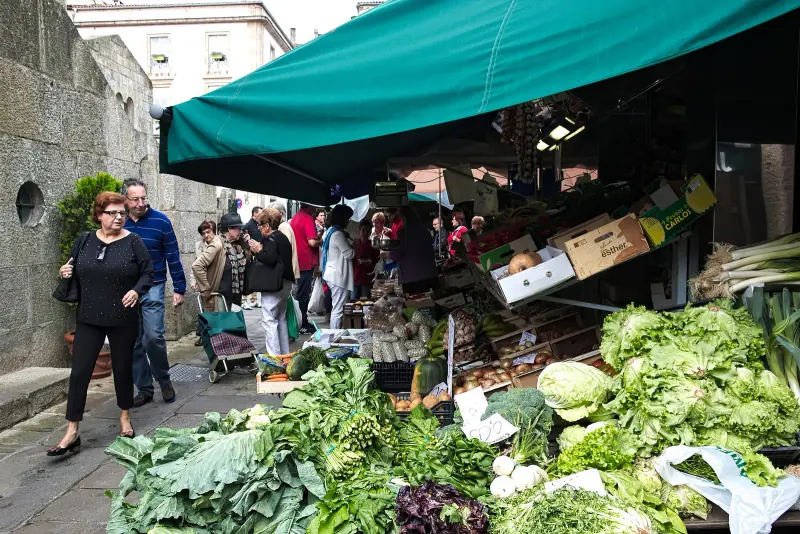 Is the Mercado de Abastos worth it?Go

Pack for it
Gear verdicts from our sister site, Real Buyer Experiences: