Santiago de Compostela / The verdict
Is Santiago's old town worth it?
Yes: the granite old town is free, compact and lived in, with pilgrim arrivals on the Obradoiro providing daily theater; rain and midday crowds are the only real costs.
By The Real Traveler Experiences team. We earn a commission if you book through our links. It never changes a verdict.
The Santiago de Compostela story
Santiago de Compostela is worth it for travelers who like old stone, food and watching people arrive somewhere they walked to. Reports describe a compact granite old town built around the cathedral, a square where pilgrims arrive after hundreds of kilometers, and a market and bar scene that makes eating the main event. Two days covers the core, and a third opens the coast.
The verdict in 30 seconds
Go
Yes: the granite old town is free, compact and lived in, with pilgrim arrivals on the Obradoiro providing daily theater; rain and midday crowds are the only real costs.
Go if
- You want a walkable historic quarter where every sight sits within about ten minutes of the next
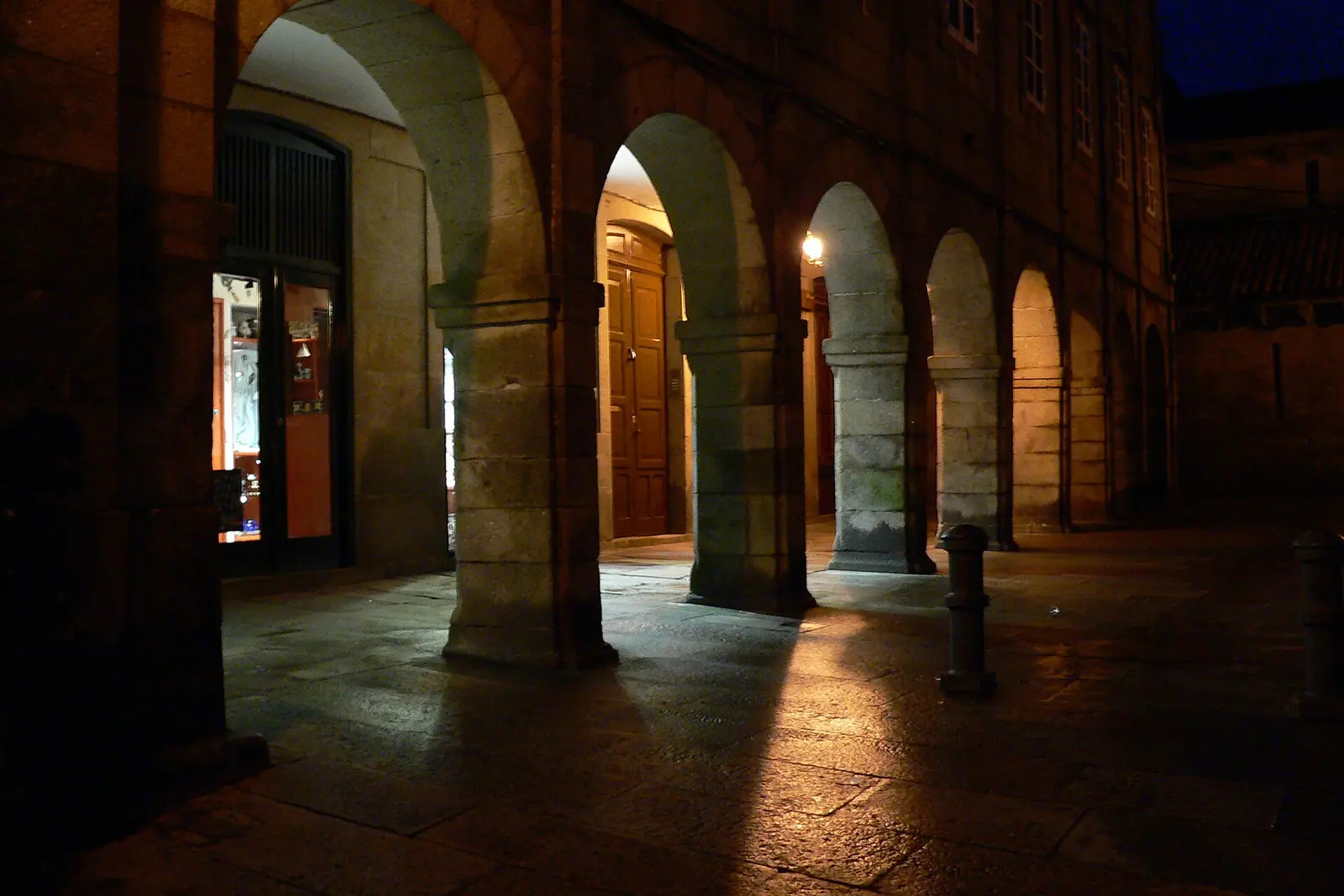
- You like granite streets and arcades that stay atmospheric in the rain
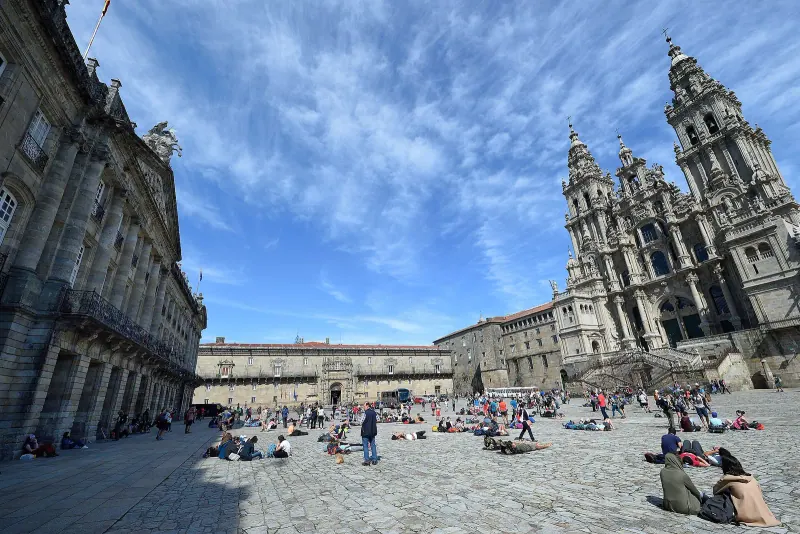
- You want to watch pilgrims arrive at Praza do Obradoiro, the city's daily spectacle
- You are happy paying only for the specific sights you enter, since the streets themselves are free
Skip if
- You need sunshine guarantees: this is one of Spain's wettest cities and showers arrive unannounced
- You dislike crowds at major monuments: the Obradoiro area packs out mid-morning to mid-afternoon in season
- You drive everywhere: the casco is largely pedestrianized with no useful parking inside
What it costs
- Entry: €0 (the old town is a public World Heritage district; you pay only for the monuments you enter). Official source, checked Oct 2026.
What travelers report
Based on 13 traveler reports (Apr 2025 to Aug 2026) and the official sources linked on this page. 3 were negative.
What people like
- Travelers call the granite streets and arcades unusually photogenic, even in rain.
- Watching pilgrims arrive at the Obradoiro is repeatedly described as the city's best free spectacle.
- The compact layout gets praise: cathedral, market, food streets and park all sit inside a short walk.
- The tapas scene around Rúa do Franco and the market earns strong marks for quality and prices.
What people complain about
- The rain is real: several accounts mention persistent showers even outside winter.
- The cathedral zone crowds up in peak season, and local press keeps covering the resident-displacement debate.
- Cobblestones and slopes make the casco harder work than it looks on a map.
How to do it right
- Anchor on Praza do Obradoiro, then loop the cathedral's other squares: Platerías, Quintana and Inmaculada.
- Walk Rúa do Vilar, Rúa do Franco and Rúa Nova, the arcaded granite streets where the tapas bars cluster.
- Push on to the Mercado de Abastos in the morning; locals and the tourism board call it the city's second most visited spot after the cathedral.
- Cross to the Alameda park for the classic postcard view back over the cathedral towers at dusk.
- Carry a rain layer year round: Galicia's weather is Atlantic and showers are routine even in summer.
- Visit the headline squares early or late: tour groups concentrate on the Obradoiro between mid morning and mid afternoon.
The trap to avoid
Judging the old town by the Obradoiro alone: the postcard square is its busiest corner, and the arcaded back streets a minute away are where the atmosphere actually lives.
Why this verdict
Yes. Santiago’s old town is free to walk, compact enough to loop on foot in a morning, and still a working neighborhood around the cathedral. UNESCO listed it on December 4, 1985, and regional coverage of the 40th anniversary in December 2025 had residents recalling how much it has changed. The pilgrim arrivals on Praza do Obradoiro are part of the show and cost nothing.
The evidence splits more than the verdict suggests. Of 13 logged reports, five are positive, five mixed and three negative. The positive ones are about the place: a returning pilgrim spending a day in the granite arcades, Quintana and Fonseca squares, an Irish walker who stayed three unplanned days over coffee and evenings with other pilgrims, and Holy Week processions threading the narrow streets. The negative ones are about pressure on it: summer 2026 news coverage of residents frustrated with pilgrim crowds, protests over pilgrims treating the Obradoiro like a campsite, and a Galician critic attacking uncivil behavior in the streets. One August report counted 11,000 pilgrims arriving in three days. None of that makes the old town less worth seeing, but it tells you when not to come and how to behave once there.
Timing and weather
All three negative reports date from July and August, when pilgrim numbers peak and the cathedral squares fill. If you visit then, see the Obradoiro early in the morning or in the evening and spend the middle of the day in the back streets.
Rain is the other cost. Two mixed reports were shaped by it: a blogger’s street show was rained on, and a retiree was caught without waterproof shoes. A spring video walks the arcades and squares in drizzle, and summer news coverage shows pilgrims filling the old town in the rain and welcoming the cooler weather. Pack a rain layer and shoes that cope with wet granite in any season.
How long and what to see
Half a day covers the core on foot. Start at the Obradoiro, then circle the cathedral through Platerias, Quintana and Inmaculada. The arcaded streets of Rua do Vilar, Rua do Franco and Rua Nova hold the bars and cafes; one blogger split two days between those lanes and the cathedral, and another found the center beautiful but heavy with souvenir shops selling tarta de Santiago. In the morning, continue to the Mercado de Abastos, the market hall that also appears in the spring walking video.
Tickets and what to book
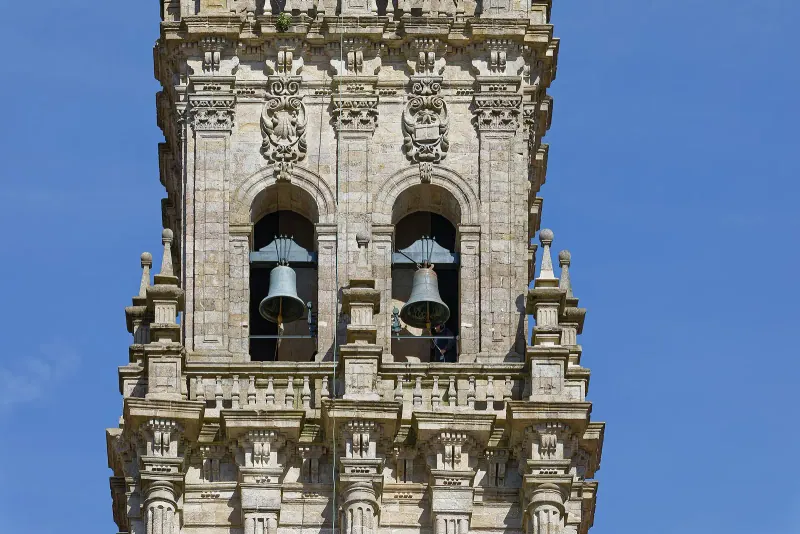
The streets cost nothing. The cathedral is the main paid add-on and you book it directly: the official site lists the basilica and the sepulchre of Saint James open every day from 7 a.m. to 9 p.m., entered from the Praterias door, with backpacks not allowed inside. The cathedral museum, including the Portico of Glory, opens daily from 10 a.m. to 8 p.m. Its guided roof tour lasts about 60 minutes, climbs 140 steps to the Ratchet Tower about 72 meters up, and is not wheelchair accessible. Ticket prices are shown only in the official booking system, so check there; see the cathedral rooftop tour page before you book.
If you want context for the streets, a small-group walk with an official guide covers the cathedral squares, the market and the old lanes in under two hours.
Book or check times
UNESCO listing: Santiago de Compostela Old TownTourism board: monuments of the historic quarter
We earn a commission if you book through our links. It never changes a verdict. How this works
See an official-guide walking tour of the old townpartner site
Where to stay
Staying in Santiago de Compostela?
A converted monastery with an indoor pool a short walk from the cathedral; the most comfortable base inside the historic core for travelers who want character and rest.
Old town, by the cathedral
Check rates on Expediapartner siteA garden-facing hotel on the old town's eastern edge, within a ten-minute walk of the market and the cathedral; quiet while staying central, which suits travelers who dislike lane noise.
Old town eastern edge
Check rates on Expediapartner siteA full-service hotel in the Ensanche, between the old town and the newer center, with a seasonal outdoor pool, sauna and gym. Guests describe it as a good four-star rather than a five-star.
Ensanche, Rua Alfredo Branas
Check rates on Expediapartner siteWhich area of Santiago de Compostela to stay in, based on traveler reports. Search Santiago de Compostela hotels on Expedia partner site
Getting there
Flying into Santiago de Compostela?
Compare every way from the airport first; trains and buses are often cheaper. Book a private airport transfer partner site
Questions
Is Santiago's old town free to visit?
Yes. The casco is a public district and a UNESCO World Heritage Site since 1985; you pay only for the monuments and museums you choose to enter.
How big is the old town?
Compact: a thorough loop of the cathedral squares, the arcaded streets and the market fits comfortably in half a day on foot, with most sights ten minutes apart.
When did the old town become a World Heritage Site?
UNESCO listed the old town on December 4, 1985, and the city marked the listing's 40th anniversary in December 2025.
Does it rain a lot in Santiago?
Yes. Santiago is one of Spain's wettest cities, and the granite arcades along streets like Rúa do Vilar exist for exactly that reason. Bring a light rain layer in any season.
Is the old town crowded?
The Obradoiro and cathedral zone crowd up mid-morning to mid-afternoon, especially in summer and Holy Years. The back streets a minute away stay calm.
Can I drive into the old town?
Effectively no: most of the casco is pedestrianized, so arrive on foot or leave the car at an edge car park.
Keep planning
More decisions in Santiago de Compostela
 Where to stay in Santiago: which area?Our pick: Casco Antiguo, the old town

 Santiago airport to the old town: which way?Our pick: Bus 6A

 Is a Finisterre day trip worth it?Go

 Is a Santiago food tour worth it?It depends

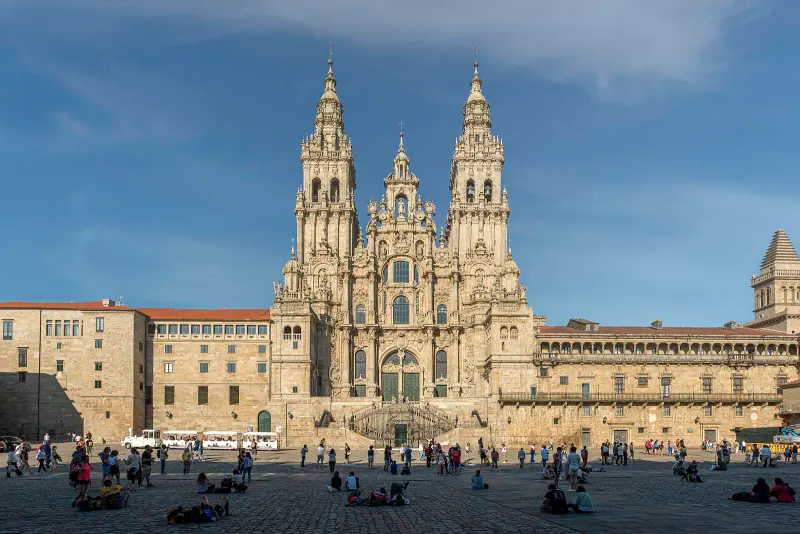 Is Santiago Cathedral worth it?Go

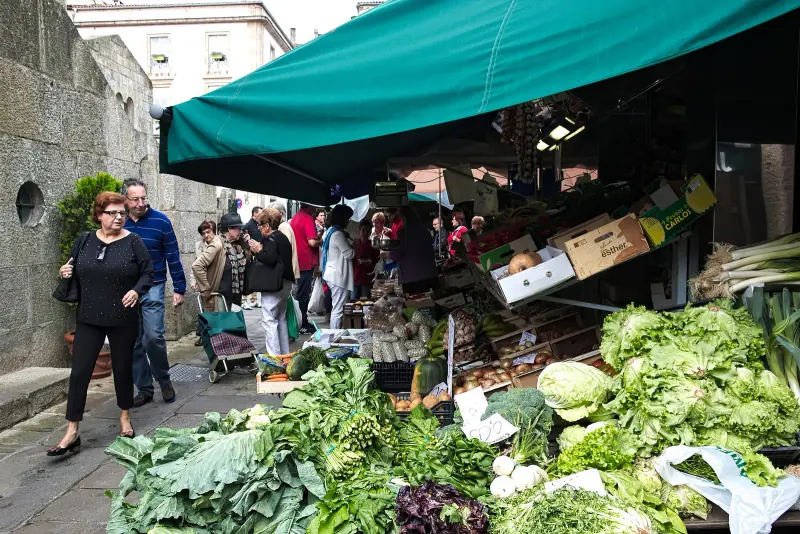 Is the Mercado de Abastos worth it?Go

Pack for it
Gear verdicts from our sister site, Real Buyer Experiences: