Vilnius / The verdict
Is the Museum of Occupations in Vilnius worth it?
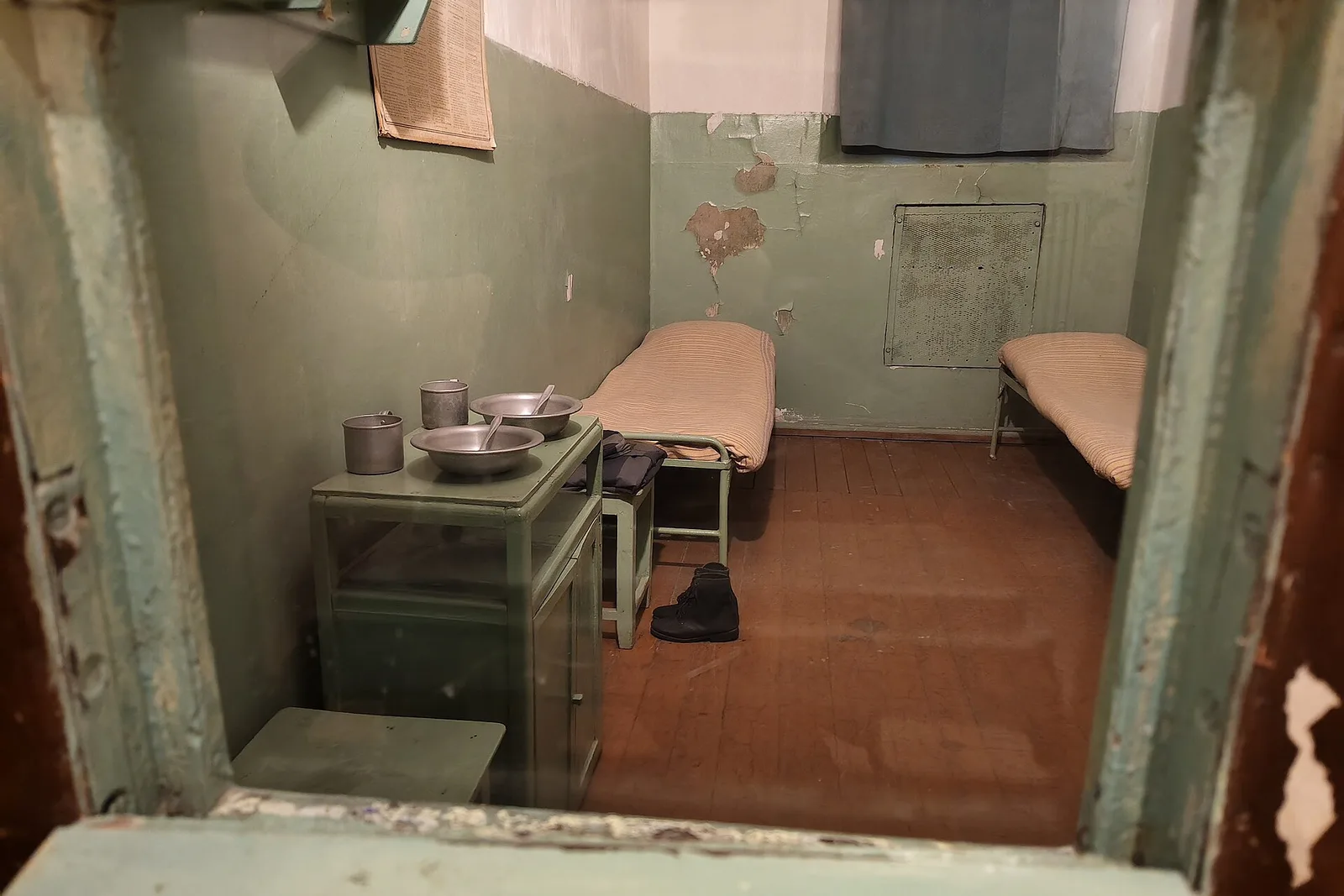
Go, if you can take heavy history. The former KGB headquarters on Aukų street keeps its basement prison exactly as found in 1991, cells, interrogation rooms and execution chamber included, and reports repeatedly call it the single most important museum in the city for 6 EUR.
By The Real Traveler Experiences team. We earn a commission if you book through our links. It never changes a verdict.
The Vilnius story
Vilnius is worth it for travelers who like a walkable old city with real depth and low prices. Reports describe a baroque [Old Town](/vilnius/vilnius-old-town/) you can cross in about 20 minutes, church interiors that reward a peek inside, and a cafe and tavern scene that stays local rather than tourist priced. It suits first-time Baltic travelers, history readers and anyone who wants a city break that does not drain the budget.
The verdict in 30 seconds
Go
Go, if you can take heavy history. The former KGB headquarters on Aukų street keeps its basement prison exactly as found in 1991, cells, interrogation rooms and execution chamber included, and reports repeatedly call it the single most important museum in the city for 6 EUR.
Go if
- You want the museum that makes Lithuania legible: the building itself was the KGB headquarters from 1940 to 1991.
- You are an adult or teen visitor ready for heavy content: the basement keeps real cells, interrogation rooms and the execution chamber.
- You are comparing Baltic occupation museums: a logged forum thread praises this one for being the actual building where it happened.
Skip if
- You are traveling with young children or want a light stop: reports frame the prison floor as adults-and-teens material.
- You cannot face executions and torture cells: the basement section is deliberately confronting rather than softened for visitors.
- You only want quick visual exhibits: upstairs galleries lean text- and document-heavy, and one logged comparison prefers Riga's more visual museum.
What it costs
- Adult admission: €6 (family tickets 9 EUR (one adult plus up to four children) or 15 EUR (two adults); free for former political prisoners, under-7s and several other groups; also free with Vilnius Pass). Official source, checked Oct 2026.
- Concession admission (pupils, students, pensioners): €3 (applies with a valid ISIC, ITIC, EYC or ERASMUS card). Official source, checked Oct 2026.
- Audio guide: €6 (recommended given how text-heavy the upstairs galleries are). Official source, checked Oct 2026.
- Guided tour in a foreign language (survey, per group): €30 (thematic tours 20 EUR; must be booked in advance). Official source, checked Oct 2026.
What travelers report
Based on 12 traveler reports (Jan 2025 to Jul 2026) and the official sources linked on this page. 0 were negative.
What people like
- 4 of the logged reports call it the city's most important or most affecting museum stop.
- A logged forum thread praises it precisely because it is the actual building, halls and cells where events happened.
- 1 logged news report describes the surviving 19 prison cells, the padded soundproof cell and the execution chamber in detail.
- Reports repeatedly flag the 6 EUR ticket as remarkably cheap for what it delivers.
What people complain about
- 1 logged forum reply rated Riga's newer occupation museum better laid-out and more informative, trading the original-building atmosphere for clearer visuals.
- Logged visitors describe the upstairs displays as document- and text-heavy, so the audio guide or a tour earns its cost.
- 1 logged report frames the visit as adults-and-teens material, given the cells, interrogation rooms and execution chamber.
- The name history confuses visitors: logged reports still call it the KGB Museum or the former Museum of Genocide Victims.
How to do it right
- Go Wednesday to Saturday: the museum is closed Monday and Tuesday and opens 10:00 to 18:00, or 10:00 to 17:00 on Sundays.
- Buy the 6 EUR ticket at the desk inside the entrance or on the museum's ticket page; concessions pay 3 EUR.
- Take the audio guide for 6 EUR or book an English guided tour ahead if you want the basement decoded properly.
- Start in the basement prison level: the cells, interrogation rooms and execution chamber are the core of the visit.
- Work up through the occupation and resistance galleries afterward; expect document-heavy displays and about two hours total.
- Find it at Aukų gatvė 2A beside Lukiškės Square, a short walk from the Old Town's western edge.
The trap to avoid
Coming on a Monday or Tuesday, when the museum is closed, or treating it as a quick stop. Reports agree the basement prison deserves unhurried time, and the upstairs reading load rewards the audio guide or a booked tour.
What to do instead
Why this verdict
The Museum of Occupations and Freedom Fights earns a go because reports keep calling it the most important museum in Vilnius, the stop that makes the country make sense. The building at Aukų gatvė 2A was the KGB headquarters for nearly fifty years, and the basement keeps the prison exactly as found in August 1991: cramped cells, interrogation rooms, a padded soundproof cell, and the execution chamber where more than a thousand prisoners were killed between 1944 and the 1960s.
The upper floors run the chronology: the first Soviet occupation, Nazi rule, deportations to Siberia, the partisan war and KGB surveillance through 1991. A logged forum thread comparing the Baltic occupation museums praises Vilnius precisely because you walk halls and cells in the actual building, while a logged news report describes the 19 original cells in detail. The 6 EUR ticket undercuts almost every comparable museum in Europe, and several visitors call it the most affecting stop of their trip.
The candor part: this is heavy material. Logged reports describe the basement as deliberately grim and frame the visit as adult material, and the upstairs displays lean on documents and reading rather than interactive exhibits; a forum reply traded that against Riga’s newer museum. Since 2018 the site has carried its current name after the earlier Museum of Genocide Victims name drew criticism for implying Holocaust coverage it does not give.
Timing and tickets
The museum is closed Monday and Tuesday, opens 10:00 to 18:00 Wednesday to Saturday and 10:00 to 17:00 on Sundays. Admission is 6 EUR with 3 EUR concessions; the audio guide is 6 EUR more and English guided tours book ahead. Allow around two hours: reports agree the basement needs time rather than a pass-through.
Book or check times
Ticket prices and hoursThe KGB prison exhibitionCity guide and free-entry days
We earn a commission if you book through our links. It never changes a verdict. How this works
Book a guided visitpartner site
Where to stay
Staying in Vilnius?
A 17th century baroque mansion turned design hotel on the Old Town's grandest street. Guests praise the generous breakfast and warm staff, and there is a spa.
Old Town, Didzioji street
Check rates on Expediapartner siteA book-themed boutique hotel in a renovated 17th century palace on a quiet lane minutes from the cathedral, with free bikes for exploring the city.
Old Town, Bernardinu street
Check rates on Expediapartner siteNo frills high rise in the New Town near the stations, with big views from upper floors. Reviewers call rooms clean and the beds comfortable, though some find the rooms dated.
Naujamiestis
Check rates on Expediapartner siteWhich area of Vilnius to stay in, based on traveler reports. Search Vilnius hotels on Expedia partner site
Getting there
Flying into Vilnius?
Compare every way from the airport first; trains and buses are often cheaper. Book a private airport transfer partner site
Questions
How much is the Museum of Occupations in Vilnius?
6 EUR for adults, 3 EUR for pupils, students and pensioners, and family tickets at 9 or 15 EUR. The audio guide costs 6 EUR more; entry is free with the Vilnius Pass.
What was the Museum of Occupations called before?
It was the Museum of Genocide Victims until a 2018 rename, and locals and reports still call it the KGB Museum. The change followed criticism that the old name implied Holocaust coverage the museum does not provide.
How long does the museum take?
About two hours for most visitors; logged reports agree the basement prison level deserves unhurried time and the upstairs galleries are document-heavy.
Is the museum suitable for children?
Logged reports frame it as adults-and-teens material: the basement keeps real cells, interrogation rooms and an execution chamber. Under-7s enter free, but the content is deliberately confronting.
When is the museum closed?
Mondays and Tuesdays. It opens 10:00 to 18:00 Wednesday to Saturday and 10:00 to 17:00 on Sundays.
Is a guided tour worth it?
Logged visitors report the guide adds what the text-dense displays cannot; the museum's own English tours are bookable ahead, and the audio guide costs 6 EUR on top of entry.
Keep planning
More decisions in Vilnius
 Where to stay in Vilnius: which area?Our pick: Old Town

 Vilnius airport to the city: which way?Our pick: Train to Vilnius Central Station

 Is a food tour in Vilnius worth it?It depends

 Is a Hill of Crosses day trip from Vilnius worth it?It depends

 Is a Trakai day trip from Vilnius worth it?Go

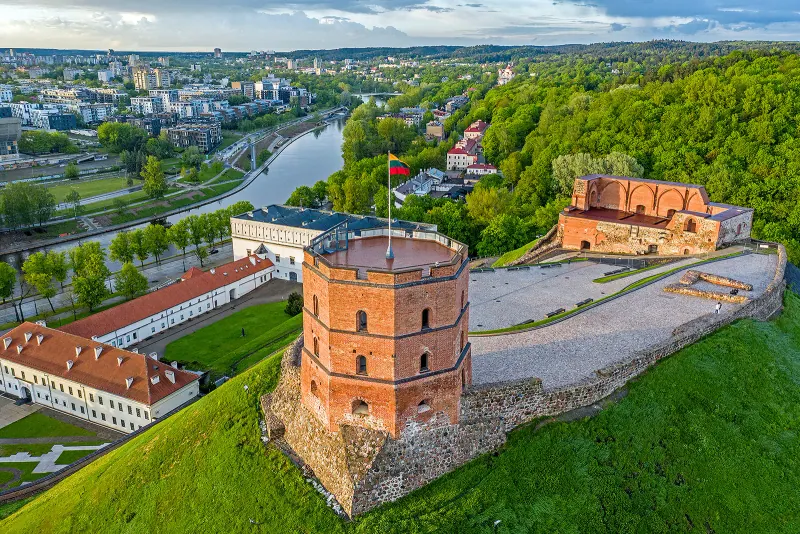 Is Gediminas Tower in Vilnius worth it?It depends
