Zadar / The verdict
Are the Sea Organ and Greeting to the Sun worth it?
Yes. Both installations are free and run around the clock on the northwest tip of the old town peninsula: the Sea Organ is 70 metres of marble steps hiding 35 pipes played by the waves, and the Greeting to the Sun is a solar-charged light disc that glows after dusk. The sound shifts with the sea state and passing boats; the crowd peaks at sunset; give it 30 to 60 minutes and stay past the light show.
By The Real Traveler Experiences team.
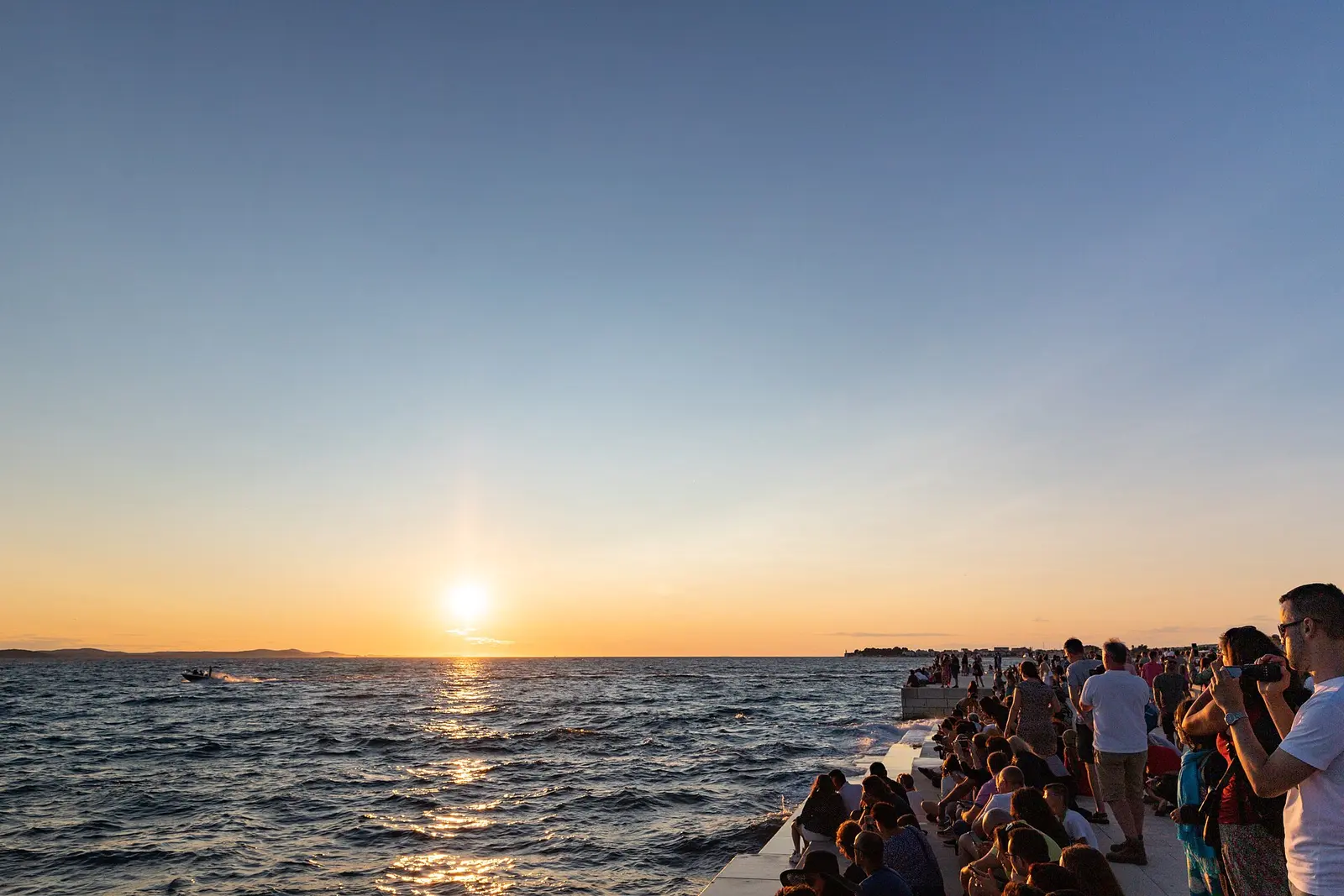
The Zadar story
Zadar is worth it for travelers who want a walkable old town, a free sunset ritual at the Sea Organ and easy day trips by boat and coach, without the crowds of Dubrovnik or the pace of Split. Reports describe it as relaxed and less polished than the big names, with a compact peninsula where almost everything is on foot.
The verdict in 30 seconds
Go
Yes. Both installations are free and run around the clock on the northwest tip of the old town peninsula: the Sea Organ is 70 metres of marble steps hiding 35 pipes played by the waves, and the Greeting to the Sun is a solar-charged light disc that glows after dusk. The sound shifts with the sea state and passing boats; the crowd peaks at sunset; give it 30 to 60 minutes and stay past the light show.
Go if
- First-time visitors who want Zadar's signature moment: a sunset with the sea itself playing the soundtrack.
- Budget travelers: both installations are free, open at all hours and need no ticket or booking.
- Swimmers who like a dip with the experience; locals swim off the same stretch of promenade.
- Sound-art and design fans curious how 35 pipes and a solar array became a city's identity.
Skip if
- You cannot share space with a crowd: on August evenings the promenade packs to the steps, so come at sunrise or in the off-season instead.
- You expect a concert: the organ is ambient and sea-dependent, and on glassy-calm days it barely murmurs.
- You are in a rush through town: the payoff needs unhurried sitting time, ideally from golden hour into blue hour.
What it costs
- Sea Organ admission: €0 (free and accessible at all hours, per the city tourism board). Official source, checked Oct 2026.
- Greeting to the Sun admission: €0 (free; the light display activates after dark, powered by the day's stored solar energy). Official source, checked Oct 2026.
- Museum of Ancient Glass, adult (daytime add-on): €7 (groups of 5 or more 5 EUR, schoolchildren 4 EUR). Official source, checked Oct 2026.
What travelers report
Based on 12 traveler reports (Apr 2025 to Jun 2026) and the official sources linked on this page. 0 were negative.
What people like
- 5 of the logged reports name the sunset pairing of organ and light disc the city's defining evening ritual.
- 2 of the logged reports note the organ sounds deeper when larger waves or boat wakes push the pipes.
- 2 of the logged reports describe spontaneous applause at sundown from the crowd on the steps.
- 2 of the logged reports emphasize it is free, unstaffed and open at any hour.
What people complain about
- 3 of the logged reports flag heavy sunset congestion on the promenade and steps in peak season.
- 2 of the logged reports call the sound subtle or faint on calm days, more ambient instrument than performance.
- 1 logged report, filed by a cruise passenger, frames it as a quick stop rather than an evening.
- 1 logged report notes calm early-morning seas soften the organ to a murmur.
How to do it right
- Walk the waterfront promenade to the northwest tip of the old town peninsula; the organ is the stepped marble edge, the light disc sits right beside it.
- Arrive 45 to 60 minutes before sunset for a seat on the steps; the solar disc's light program only registers properly after dusk.
- Know that the organ sounds different every day: calm seas murmur while waves and passing boat wakes push deeper chords through the pipes.
- Stay 20 to 30 minutes after the sun drops; the disc cycles through its light sequence as the crowd thins.
- For a quieter visit come at sunrise or midday in shoulder season; the organ is audible whenever waves lap, crowds or none.
- Pack a swimsuit in season: people swim off the promenade beside the organ on warm days.
The trap to avoid
Treating the pair as a daytime box to tick. Before dusk the light disc is just a floor of glass panels and the organ can fade to a murmur on calm days; arriving right at sunset means sharing the steps with every tour group in town. The winning play is either a long, slow sunset that runs into the lit-up disc, or a near-empty early morning when the sea does the same performance for nobody.
What to do instead
Why this verdict
Yes. The Sea Organ and the Greeting to the Sun are free, open at all hours, and side by side at the northwest tip of Zadar’s old town, so there is nothing to lose by going. The question is when, because the sea and the sunset decide how good the visit is.
The reports are almost all positive. A 2025 spotlight piece recaps the organ’s April 2005 opening and the 35 pipes under 70 metres of marble steps, a city guide calls the pairing Zadar’s signature evening, and a things-to-do guide puts the sunset slot at the top of its list. A 2026 essay describes locals and students gathering for sunset, applause breaking out as the sun goes down, and boat wakes changing the sound. Local and regional news marked the organ’s twentieth anniversary in 2025 with an interview with architect Nikola Bašić and a free multimedia show at the Church of St Nicholas.
The two mixed reports set the expectations. A calm-morning video catches the organ at a murmur, with locals explaining that the loudest tones come with bigger waves. A road-trip diary found the promenade packed at sunset, though the organ swelled when a boat wake hit and the disc lit up the scene after dark. A cruise passenger’s diary notes that the seafront can draw thousands at once. So the organ is an ambient sound that depends on the sea, and the sunset slot is shared with a crowd.
Timing and tickets
Tickets: none. The Zadar tourism board lists both installations as free and open at all hours.
Getting there: walk the waterfront promenade along the old town peninsula to its northwest tip. The organ is the stepped marble edge at the water, and the Greeting to the Sun is the circle of glass panels right beside it.
Best time: sunset if you want the full effect, since the Greeting to the Sun stores solar energy during the day and its light display only shows properly after dark. Arrive early to get a place on the steps and stay after the sun drops for the light show. In August expect the steps to be full. For the sound without the crowd, go early in the morning or on a shoulder-season afternoon, accepting that a flat sea makes the organ quieter.
How long: the installations are a sit-and-listen stop, not a walk-through. Reports treat it as an evening ritual rather than a quick photo, so give yourself enough time for a few wave cycles and the start of the light display.
What to bring: a swimsuit in season, since people swim off the promenade beside the organ.
What to combine: the old town is right behind the promenade, and one itinerary slots the sunset after a circuit of the Roman forum. The Museum of Ancient Glass charges 7 EUR for adults on its own price list, with 4 EUR for schoolchildren, and makes a good daytime stop before you head to the waterfront for sunset.
Book or check times
Sea Organ on the Zadar tourism boardGreeting to the Sun on the Zadar tourism board
Where to stay
Staying in Zadar?
Which area of Zadar to stay in, based on traveler reports. Search Zadar hotels on Expedia partner site
Getting there
Flying into Zadar?
Compare every way from the airport first; trains and buses are often cheaper. Book a private airport transfer partner site
Questions
Where exactly are the Sea Organ and Greeting to the Sun?
On the northwest tip of Zadar's old town peninsula, along the waterfront promenade. The Sea Organ is built into 70 metres of marble steps at the sea's edge and the Greeting to the Sun light disc sits immediately beside it; walk the promenade from the old town and you cannot miss the steps.
How much does it cost to see the Sea Organ and Greeting to the Sun?
Nothing. Both are free public installations, open around the clock, and the city tourism board lists them without any ticket or booking.
What is the best time of day to visit?
Sunset is the famous slot: the organ plays as the light turns and the solar disc glows once darkness falls, with the same crowd as everyone else. Early morning and shoulder-season afternoons give you the same sounds with far fewer people.
How long should I plan for the Sea Organ?
Thirty to sixty minutes covers most visits: sit on the steps, listen through a few wave cycles, then watch the light disc after dusk. Reports suggest treating it as an evening ritual rather than a five minute photo stop.
Does the Sea Organ sound the same every time?
No. The 35 pipes respond to wave energy, so a glassy-calm day produces a faint murmur while choppy seas and passing boat wakes drive deeper, fuller chords. Locals tell reporters the loudest tones come when larger waves hit.
Is it crowded?
On August evenings, yes: reports describe the promenade and steps packed and applause breaking out at sundown. Outside peak hours it is a quiet stretch of waterfront where individuals drift in and out all day.
Keep planning
More decisions in Zadar
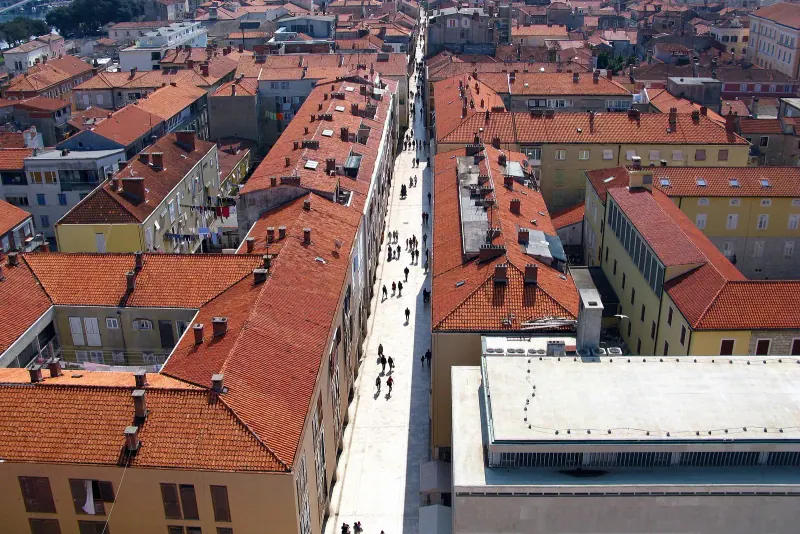 Where to stay in Zadar: which base?Our pick: Kolovare and Arbanasi

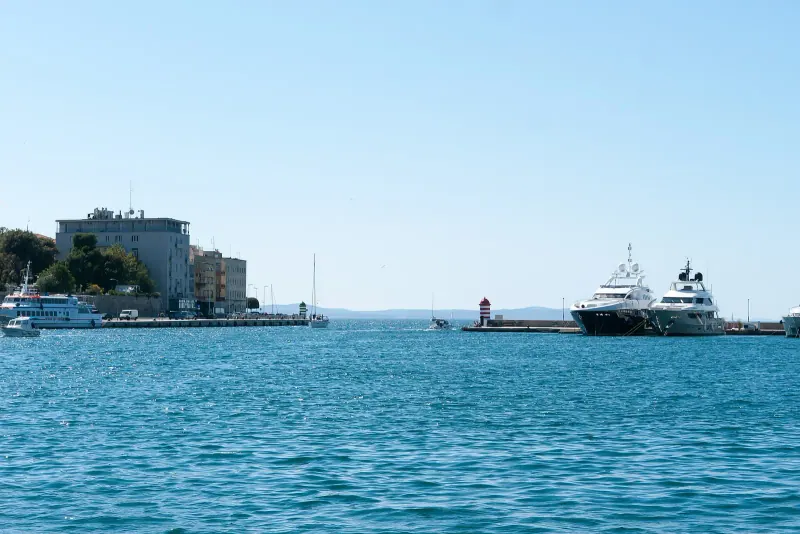 Zadar airport to the old town: which way?Our pick: Liburnija airport shuttle

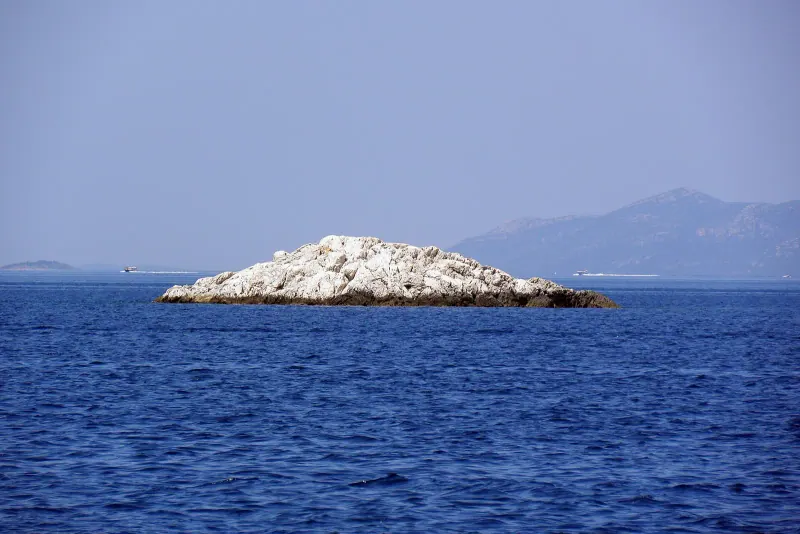 Is a Kornati Islands day trip worth it?It depends

 Is a Plitvice Lakes day trip worth it?It depends

 Is a Zadar boat trip worth it?Go

 Is a Zadar food tour worth it?It depends

Pack for it
Gear verdicts from our sister site, Real Buyer Experiences: