Catania / The verdict
Is the Monastero dei Benedettini in Catania worth it?
One of Europe's largest monasteries doubles as Catania's university, and reports rate the 10-euro guided tour as the city's best-value sight: 75 minutes through baroque cloisters, kitchens and Roman remains with a working-campus atmosphere. The catch is the interiors are guided-only, so you cannot wander them alone.
By The Real Traveler Experiences team. We earn a commission if you book through our links. It never changes a verdict.
The Catania story
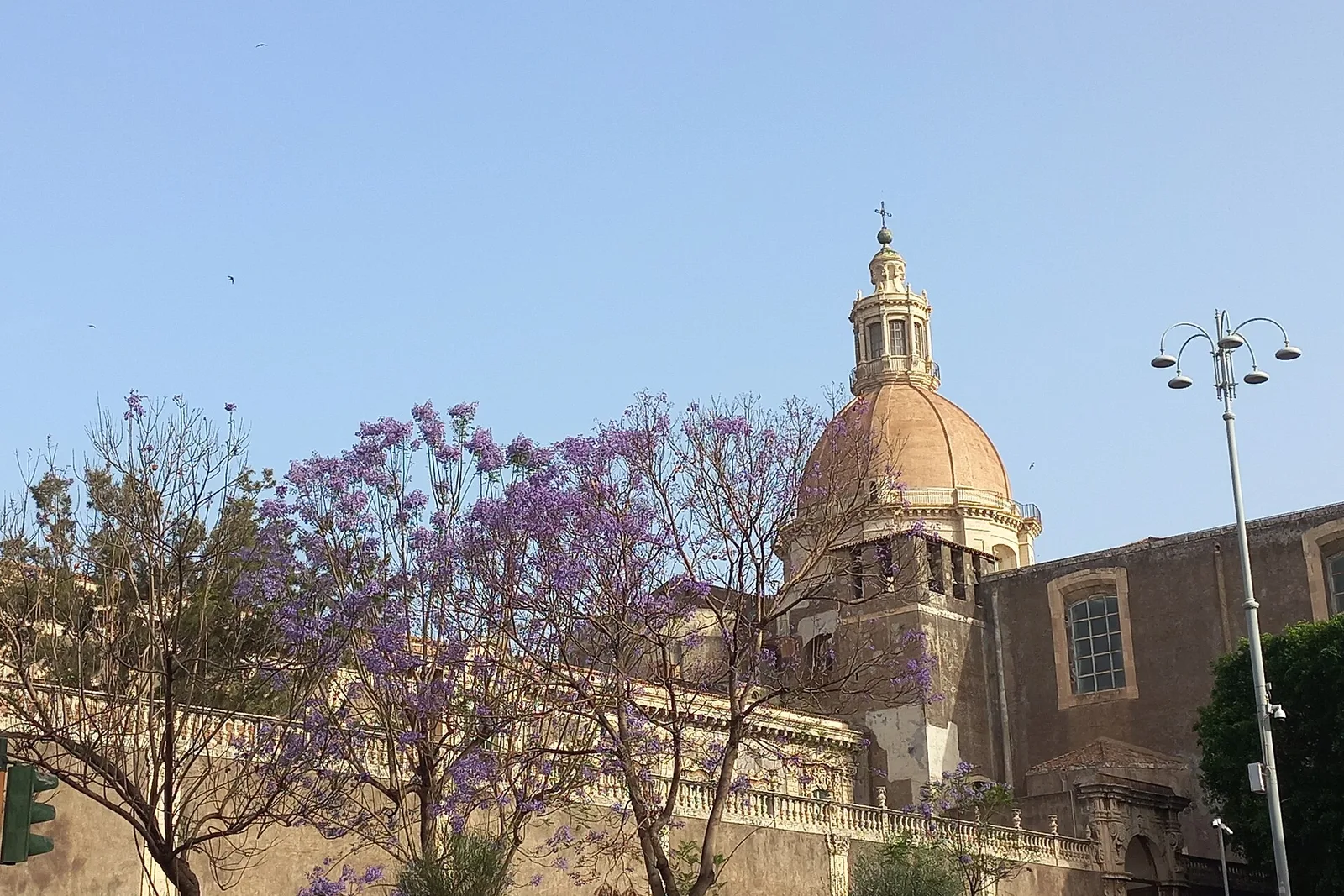
Catania is worth it for travelers who want a working Sicilian city with real street life, serious food and the easiest base for Etna, Syracuse and Taormina. It is not a postcard town. Reports describe a baroque center rebuilt in dark lava stone, a fish market that shouts at you before breakfast and a volcano on the skyline that doubles as the main day trip.
The verdict in 30 seconds
Go
One of Europe's largest monasteries doubles as Catania's university, and reports rate the 10-euro guided tour as the city's best-value sight: 75 minutes through baroque cloisters, kitchens and Roman remains with a working-campus atmosphere. The catch is the interiors are guided-only, so you cannot wander them alone.
Go if
- You want a monumental sight in the city center that costs a fraction of major attractions
- You like architecture with layers: a monastery rebuilt over Roman baths, damaged by lava and earthquake, now a university
- You enjoy guided tours; the interiors are only visitable with the official operator's tour
Skip if
- You dislike guided visits; there is no self-guided access to the interior rooms
- You are in a hurry and cannot commit to a 75-minute tour at a fixed slot
- Churches and cloisters do not interest you; the cloister gardens and courtyards are the free version
What it costs
- Guided tour, full ticket: €10 (about 75 minutes, daily with slots 10:00 to 17:00; booking recommended). Official source, checked Oct 2026.
- Combined ticket, monastery plus Botanical Garden: €15 (the garden is the monastery's own botanical collection a short walk away). Official source, checked Oct 2026.
- Combined ticket, monastery plus garden plus Villa Cerami: €20 (adds the neoclassical villa that hosts the university's law faculty). Official source, checked Oct 2026.
What travelers report
Based on 12 traveler reports (Mar 2025 to Sep 2026) and the official sources linked on this page. 0 were negative.
What people like
- Visitors and guides praise the tour itself: 75 minutes of architecture, history and curiosity delivered at a budget price.
- The setting earns admiration: a baroque giant rebuilt after lava and earthquake, layered directly over Roman remains.
- The monastery's second life as a university gives it a lived-in atmosphere reports find more interesting than a preserved museum piece.
- Local press calls it one of the city's most fascinating buildings, with stories 'nobody knows' behind the cloisters.
- Evening openings and cloister concerts get warm coverage as the atmospheric way to see it.
What people complain about
- The interiors are guided-only, which frustrates visitors who wanted to wander freely.
- Tour slots sell out and walk-ins can find the next English slot hours away.
- The official site's practical information is thin; reports advise booking through the operator directly rather than relying on the main site.
- Some visitors expect a solemn religious site and find a busy university instead, with students and lectures around the cloisters.
- Access can be disrupted by university events, exams or restoration work, so times shift.
How to do it right
- Book the guided tour with Officine Culturali, the official operator: about 75 minutes, daily slots roughly 10:00 to 17:00, 10 euros full price.
- Do not just show up expecting to wander: reports confirm the interior rooms are visitable only with the tour, though the monumental grounds and cloister gardens stay open daily.
- Reserve ahead in high season and on weekends; slots sell out and groups are capped.
- Consider the combined ticket with the Botanical Garden for 15 euros if you want a quieter follow-on, or the triple ticket adding Villa Cerami for 20.
- Look for the Roman city underneath: the tour descends into spaces where Roman baths and a domus sit beneath the baroque floors.
- In summer, check the evening openings: the operator runs 'Luci e ombre' night tours and the university magazine reports a growing evening-visit program.
The trap to avoid
Assuming it is a church you can walk into for free. The monumental interiors are guided-only through the official tour at 10 euros; the free version is the cloister grounds and courtyards, which are pleasant but not the reason the monastery is famous.
What to do instead
Why this verdict
Yes. The monastery is one of the largest monastic complexes in Europe, rebuilt over five centuries after lava flows and earthquakes, and today it houses the University of Catania’s Department of Humanities. All 12 logged reports are positive, from local dailies to two-day itineraries, and the common thread is value: a 10-euro guided tour of about 75 minutes takes you through the baroque cloisters, the monumental kitchens and the Roman remains under the floors, in a building still used every day by students.
An architecture journal makes the case that the building itself is the attraction: the layers of Roman baths, baroque rebuilding and the university conversion are all visible on the route. A feature on the two cloisters calls them among the most beautiful spaces in the complex, and an English-language tour review describes the walk through cloisters, kitchens and excavations as the core of the visit. Local press adds the life the building has beyond the tour: a Catania daily digs into the lesser-known stories behind its walls, and the regional daily covers evening concerts in the Levante cloister.
The tradeoffs are structural. The interiors are guided-only, which an Italian travel report states plainly, so there is no self-guided wandering. It is also a working campus, so expect corridor noise and students rather than a hushed religious site. If you want the quiet version, the free cloister grounds give you the courtyards but not the rooms that make the monastery famous.
Timing and tickets
The official operator, Officine Culturali, runs the tours daily with slots from about 10:00 to 17:00 and sells the full ticket at 10 euros. Book ahead in high season and at weekends, because groups are capped and the next English slot can be hours away. Combined tickets extend the visit cheaply: 15 euros adds the university’s Botanical Garden, and 20 euros adds Villa Cerami as well.
Allow 75 minutes for the tour itself and another half hour if you want to sit in the cloister gardens afterward. In summer the operator runs evening visits, which the university’s own magazine and a local listings site both cover; they suit travelers who spend the hot middle of the day indoors or at the beach.
The entrance is at Piazza Dante 32, inside the historic center, so most visitors staying in the old town can walk there.
What to combine nearby
A two-day itinerary in the log pairs the monastery with the fish market and Castello Ursino, which keeps a full morning or afternoon on foot in the old center. A morning at the market followed by a late-morning tour slot works well on foot. The Botanical Garden on the combined ticket is a quieter follow-on for the afternoon. Save Etna for a separate day.
Book or check times
Officine Culturali: monastery tours and ticketsMonastero dei Benedettini official site
We earn a commission if you book through our links. It never changes a verdict. How this works
Check English tour timespartner site
Where to stay
Staying in Catania?
Which area of Catania to stay in, based on traveler reports. Search Catania hotels on Expedia partner site
Getting there
Flying into Catania?
Compare every way from the airport first; trains and buses are often cheaper. Book a private airport transfer partner site
Questions
Is the Monastero dei Benedettini free?
Partly. The grounds and cloister gardens are open daily and free. The monumental interiors, the kitchens, the Roman remains and the famous corridors, are visitable only on the official guided tour at 10 euros.
How do you visit the inside of the monastery?
Only on the guided tour run by Officine Culturali, the site's official operator. Tours last about 75 minutes, run daily with slots roughly 10:00 to 17:00, and reports recommend booking ahead.
Is the monastery tour worth 10 euros?
Reports call it one of Catania's best-value sights: the guides trace the building through lava, earthquake and centuries of reuse, down to the Roman baths beneath it. The price is low for what the tour covers.
What is the monastery now?
It is the University of Catania's humanities campus: lectures by day, tours and evening events around them. That double life is part of what reports find unusual about it.
How long do you need at the monastery?
The tour takes about 75 minutes; add time for the cloister gardens and, with the combined tickets, the Botanical Garden or Villa Cerami. Most visitors report two hours total.
Can you visit in the evening?
Seasonally yes. The operator runs evening 'Luci e ombre' visits and the site hosts concerts in the cloisters; local listings flag these as the atmospheric alternative to the daytime tour.
Keep planning
More decisions in Catania
 Where should you stay in Catania?Our pick: Centro Storico and Via Etnea

 Catania airport to the city: which way?Our pick: AMTS Alibus

 Is a Syracuse day trip from Catania worth it?Go

 Catania or Palermo?Our pick: Palermo

 Is a food tour in Catania worth it?Go

 Is a Mount Etna tour from Catania worth it?Go
